

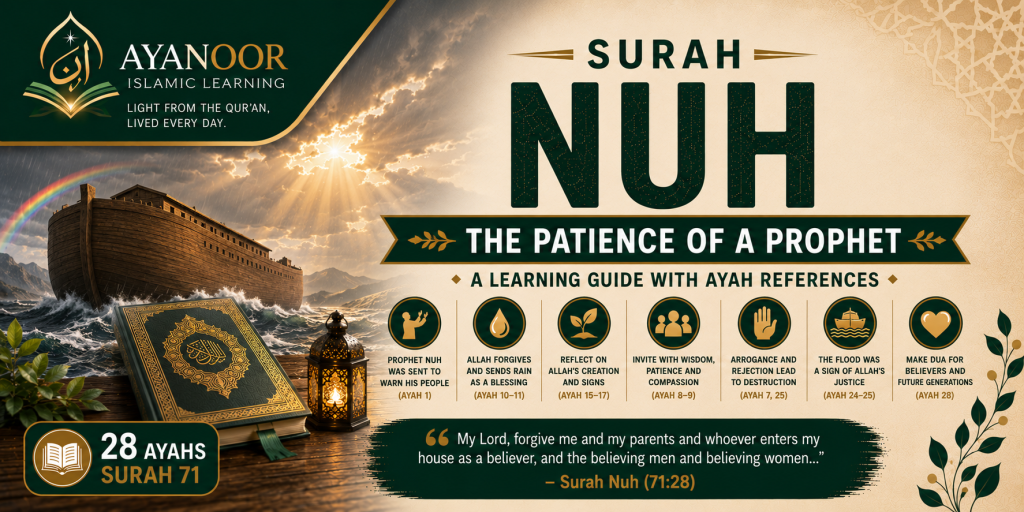
Surah Nuh is the 71st chapter of the Qur’an, consisting of 28 ayahs. The Surah presents the heartfelt mission of Prophet Nuh (Noah) عليه السلام, who patiently called his people toward Allah for many centuries despite rejection, mockery, and resistance.
The Surah focuses on patience in dawah (calling toward truth), repentance, gratitude, reflection on creation, and the consequences of arrogance and persistent disbelief.
1. Prophet Nuh Was Sent to Warn His People
The Surah begins with Allah sending Prophet Nuh عليه السلام to guide his people.
“Indeed, We sent Noah to his people, saying: Warn your people before there comes to them a painful punishment.”
— Ayah 1
Lessons
- Prophets were sent as guides and warners.
- Guidance is a mercy from Allah.
- Calling people toward truth is an act of compassion.
Reflection
True care for humanity includes helping people spiritually, morally, and emotionally — not only materially.
2. The Core Message: Worship Allah Alone
Prophet Nuh عليه السلام said:
“Worship Allah, fear Him, and obey me.”
— Ayah 3
Lessons
- Tawheed (belief in the Oneness of Allah) is the foundation of Islam.
- Obedience to Allah brings protection and guidance.
- Faith should shape how people live and behave.
Reflection
The message of all Prophets was centered on:
- Worshipping Allah alone
- Living morally
- Preparing for accountability
3. Repentance Brings Mercy and Blessings
One of the most beautiful sections of the Surah describes the benefits of sincere repentance.
“Seek forgiveness from your Lord. Indeed, He is ever Forgiving.”
— Ayah 10
And Allah says:
“He will send rain from the sky upon you in abundance.”
— Ayah 11
“And give you wealth and children…”
— Ayah 12
Lessons
- Istighfar (seeking forgiveness) brings spiritual and worldly blessings.
- Allah’s mercy remains open to all who repent sincerely.
- Repentance renews both individuals and societies.
Reflection
Believers should make istighfar a regular part of life:
- During hardship
- After mistakes
- In moments of gratitude
- In daily worship
4. Reflect on Allah’s Creation
Prophet Nuh عليه السلام called his people to observe creation.
“Do you not consider how Allah created seven heavens in layers?”
— Ayah 15
And:
“And made the moon therein a light and made the sun a lamp?”
— Ayah 16
Lessons
- Nature is filled with signs of Allah’s power and wisdom.
- Reflection strengthens faith and humility.
- The Qur’an encourages observation and contemplation.
Reflection
The skies, planets, oceans, mountains, and natural systems are reminders of divine order and mercy.
5. Human Beings Were Created Gradually
“And Allah has caused you to grow from the earth progressively.”
— Ayah 17
Lessons
- Human life develops through stages by Allah’s design.
- Creation itself is a sign of Allah’s wisdom.
- Humility should come from recognizing our origin.
Reflection
The Surah encourages believers to think deeply about:
- Human development
- Nature
- Life cycles
- Divine planning
6. Prophet Nuh Used Many Methods to Invite People
He says:
“Then indeed I invited them publicly.”
— Ayah 8
“Then I announced to them and also spoke to them privately.”
— Ayah 9
Lessons
- Effective communication requires wisdom and patience.
- Different people respond to different approaches.
- Dawah should include compassion and persistence.
Reflection
Teaching truth requires:
- Patience
- Wisdom
- Understanding
- Sincerity
- Emotional intelligence
7. Arrogance Prevented People From Accepting Truth
The people rejected Nuh عليه السلام stubbornly.
“And indeed, every time I invited them that You may forgive them, they put their fingers in their ears…”
— Ayah 7
Lessons
- Pride and stubbornness can blind people from guidance.
- Rejecting truth repeatedly hardens the heart.
- Guidance requires humility.
Reflection
Sometimes people reject truth not because they lack evidence, but because they refuse to change.
8. Blind Following of Society Leads People Astray
The people followed corrupt leaders and traditions.
“And they said: Never leave your gods…”
— Ayah 23
Lessons
- Blindly following culture or influential figures can lead people away from truth.
- Believers should think critically and sincerely seek guidance.
- Tradition should never replace revelation.
Reflection
The Qur’an encourages believers to:
- Reflect independently
- Seek knowledge
- Avoid arrogance and blind imitation
9. Persistent Corruption Destroys Societies
After centuries of rejection and corruption, the flood came.
“Because of their sins they were drowned…”
— Ayah 25
Lessons
- Societies face consequences when corruption becomes widespread.
- Allah’s justice is real.
- Persistent rejection of truth harms entire communities.
Reflection
The story of Nuh عليه السلام is both historical and timeless — warning humanity against arrogance, injustice, and spiritual neglect.
10. Prophet Nuh’s Concern for Future Generations
Nuh عليه السلام prayed:
“My Lord, do not leave upon the earth from among the disbelievers an inhabitant.”
— Ayah 26
Because they would continue spreading corruption.
Lessons
- Leaders and parents should care about future generations.
- Spiritual corruption affects society long-term.
- Protecting future generations is part of responsibility.
11. A Beautiful Dua for Believers
The Surah ends with a touching dua:
“My Lord, forgive me and my parents and whoever enters my house as a believer, and the believing men and believing women…”
— Ayah 28
Lessons
- Believers should pray for family and community.
- Forgiveness and mercy are central themes in Islam.
- True faith includes concern for others.
Reflection
The dua teaches humility, compassion, and collective care for the believing community.
Major Themes of Surah Nuh
| Theme | Ayah Reference |
| Prophet Nuh’s mission | 1–4 |
| Repentance and forgiveness | 10–12 |
| Reflection on creation | 15–20 |
| Patience in dawah | 5–9 |
| Arrogance and rejection | 7 |
| Blind following of falsehood | 23 |
| Consequences of corruption | 25 |
| Concern for future generations | 26–27 |
| Dua for believers | 28 |
Practical Lessons for Daily Life
Personal Growth
- Make repentance a daily habit.
- Practice patience during difficulty.
- Reflect regularly on Allah’s creation.
Family & Society
- Guide others with wisdom and compassion.
- Pray for family and future generations.
- Avoid blind following and unhealthy influence.
Spiritual Development
- Strengthen belief in Tawheed.
- Increase gratitude and humility.
- Trust Allah even when results seem delayed.
Self-Reflection Questions
- How patient am I when facing rejection or hardship?
- Do I regularly seek Allah’s forgiveness?
- Do I reflect deeply on Allah’s creation?
- Am I influenced more by truth or by social pressure?
- What spiritual legacy am I leaving for future generations?
Final Reflection
The Quran teaches believers the power of patience, sincere effort, repentance, and unwavering trust in Allah. Prophet Nuh عليه السلام spent centuries calling his people with compassion, wisdom, and perseverance despite rejection and ridicule.
The Surah reminds humanity that:
- Allah’s mercy is always open
- Repentance brings blessings
- Reflection strengthens faith
- Arrogance destroys guidance
- Patience and sincerity are beloved to Allah
Through the story of Prophet Nuh عليه السلام, believers learn how to remain steadfast, compassionate, and hopeful while calling toward truth and righteousness.
Leave a Reply