

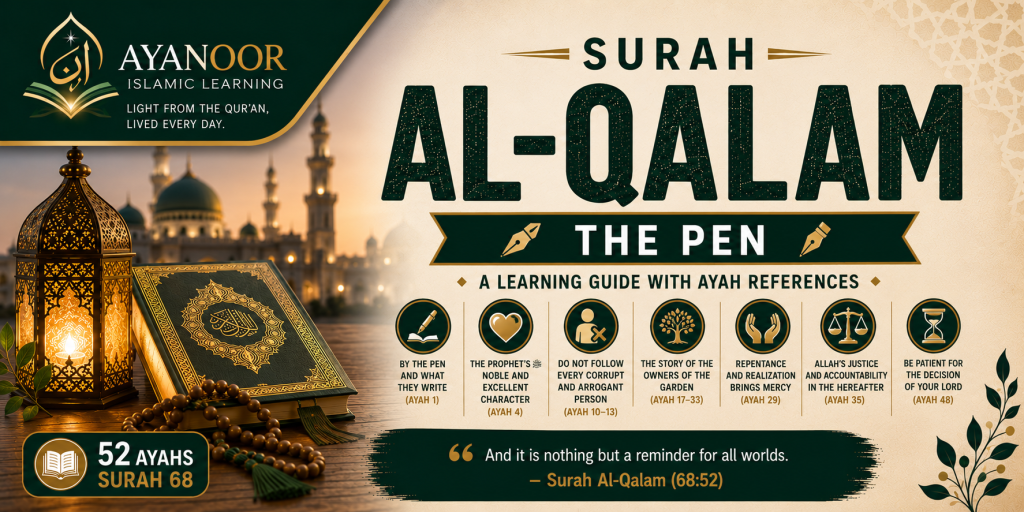
Surah Al-Qalam is the 68th chapter of the Qur’an, consisting of 52 ayahs. The Surah was revealed in the early Makkan period and strongly emphasizes moral character, patience, truthfulness, humility, and accountability before Allah.
The word Al-Qalam means “The Pen,” symbolizing knowledge, learning, recording, and the importance of truth. The Surah defends the character of the Prophet Muhammad ﷺ against false accusations while warning against arrogance, greed, and cruelty.
1. The Pen and the Importance of Knowledge
The Surah opens with a powerful oath:
“Nun. By the pen and what they write.”
— Ayah 1
Lessons
- Knowledge is honored in Islam.
- Writing preserves truth, wisdom, and accountability.
- Learning and reflection are sacred responsibilities.
Reflection
The pen represents:
- Education
- Revelation
- Documentation
- Civilization
- Moral responsibility
Islam encourages believers to seek knowledge that benefits humanity and strengthens faith.
2. The Prophet ﷺ Had Excellent Character
Allah immediately defends the Prophet ﷺ:
“And indeed, you are of a العظيم character.”
— Ayah 4
Lessons
- Good character is one of the greatest qualities in Islam.
- True strength lies in patience, honesty, and mercy.
- Prophetic leadership was built on moral excellence.
Reflection
The Surah teaches believers that:
- Character matters more than status.
- Faith should transform behavior.
- Kindness and integrity are signs of spiritual maturity.
3. Do Not Follow Corrupt Influence
The Surah warns against blindly obeying people who spread corruption and arrogance.
“And do not obey every worthless habitual swearer…”
— Ayah 10
The Surah describes qualities such as:
- Gossip
- Backbiting
- Cruelty
- Greed
- Arrogance
- Dishonesty
Lessons
- Not every influential person deserves to be followed.
- Believers should evaluate character, not popularity.
- Corruption often spreads through bad influence.
Reflection
Modern society often glorifies:
- Fame
- Wealth
- Power
- Loud personalities
The Qur’an teaches believers to prioritize integrity over image.
4. The Story of the Owners of the Garden
One of the major lessons in the Surah is the story of wealthy garden owners who planned to withhold charity from the poor.
“Indeed, We tested them as We tested the أصحاب الجنة…”
— Ayah 17
They intended to harvest secretly without helping the needy.
But Allah destroyed their garden overnight.
“So it became as though harvested.”
— Ayah 20
Lessons
- Wealth is a test from Allah.
- Greed destroys blessings.
- Blessings should be shared with gratitude and compassion.
Reflection
The story teaches believers:
- Never become arrogant because of wealth.
- Support the poor and vulnerable.
- Generosity protects blessings.
5. Realization and Repentance
When the أصحاب الجنة saw their destroyed garden, they admitted their wrongdoing.
“They said, ‘Glory be to our Lord! Indeed, we were wrongdoers.’”
— Ayah 29
Lessons
- Hardship can awaken spiritual awareness.
- Repentance opens the door to mercy.
- Admitting mistakes is a sign of humility.
Reflection
People often recognize blessings only after losing them. The Surah encourages gratitude before regret.
6. The Hereafter Is Not Equal for Everyone
The Surah asks a powerful question:
“Should We treat those who submit like the criminals?”
— Ayah 35
Lessons
- Justice ultimately belongs to Allah.
- Good and evil are not equal.
- Accountability exists beyond worldly life.
Reflection
Sometimes injustice appears to succeed temporarily in this world, but the Surah reminds believers that final judgment belongs to Allah.
7. Patience During Trials
Allah instructs the Prophet ﷺ to remain patient.
“So be patient for the decision of your Lord…”
— Ayah 48
The Surah references Prophet Yunus (Jonah) عليه السلام as a reminder about patience and perseverance.
Lessons
- Prophets also faced hardship and emotional struggle.
- Patience is essential during opposition and difficulty.
- Believers should avoid despair.
Reflection
Patience includes:
- Emotional control
- Trust in Allah
- Continuing good deeds during hardship
- Remaining hopeful
8. Avoid Arrogance and Self-Righteousness
The Surah repeatedly criticizes arrogance and pride.
Lessons
- Arrogance blinds people from truth.
- Wealth and status can create spiritual corruption.
- Humility keeps the heart soft and sincere.
Reflection
Believers are encouraged to:
- Remain teachable
- Accept advice
- Treat others respectfully
- Avoid looking down on people
9. The Qur’an Is a Reminder for Humanity
The Surah concludes by emphasizing the truth and universality of the Qur’an.
“And it is nothing but a reminder for all worlds.”
— Ayah 52
Lessons
- The Qur’an is guidance for all humanity.
- Revelation brings moral clarity and spiritual healing.
- The message of Islam is universal.
Reflection
The Qur’an is meant to:
- Transform hearts
- Guide behavior
- Build justice
- Strengthen communities
- Bring people closer to Allah
Major Themes of Surah Al-Qalam
| Theme | Ayah Reference |
| The importance of knowledge and writing | 1 |
| The character of the Prophet ﷺ | 4 |
| Warning against corrupt influence | 10–13 |
| The story of the garden أصحاب الجنة | 17–33 |
| Repentance and humility | 29 |
| Accountability in the Hereafter | 35 |
| Patience during trials | 48 |
| Avoiding arrogance | Throughout |
| The Qur’an as universal guidance | 52 |
Practical Lessons for Daily Life
Personal Growth
- Develop strong character and honesty.
- Practice gratitude before blessings disappear.
- Stay humble during success.
Family & Society
- Use wealth responsibly and generously.
- Avoid harmful influence and gossip.
- Build communities based on compassion and justice.
Spiritual Development
- Seek beneficial knowledge.
- Practice patience during hardship.
- Strengthen connection with the Qur’an daily.
Self-Reflection Questions
- What kind of character am I developing?
- Do I use my blessings selfishly or generously?
- Am I influenced more by truth or popularity?
- How patient am I during hardship?
- Do I appreciate Allah’s blessings before losing them?
Final Reflection
The Quran teaches believers that true honor comes through knowledge, good character, humility, patience, and sincere faith — not through wealth, pride, or social status.
The Surah reminds humanity that:
- Character matters deeply
- Wealth is a test
- Arrogance destroys blessings
- Patience leads to strength
- The Qur’an is guidance for all people
Through its powerful lessons and stories, the Surah encourages believers to live with integrity, compassion, wisdom, and constant awareness of Allah.
Leave a Reply