

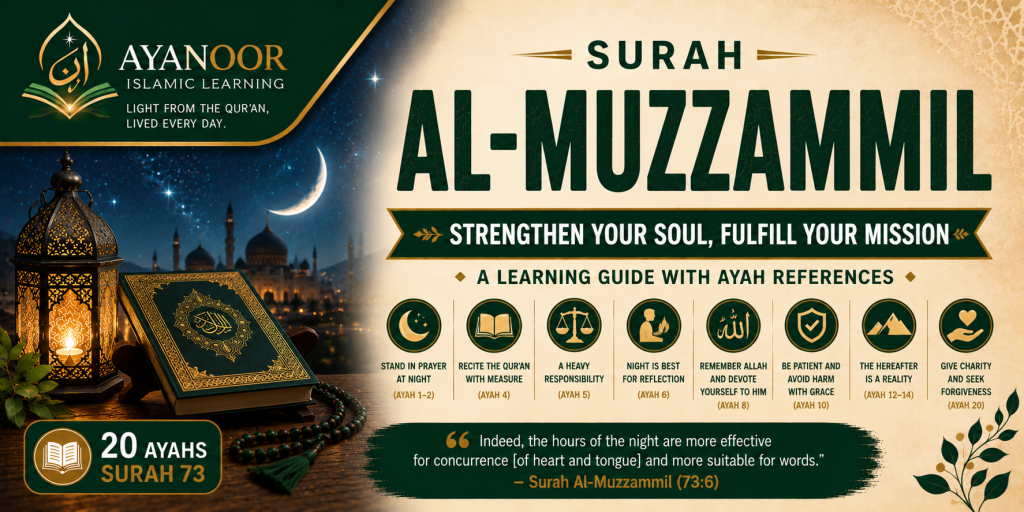
Surah Al-Muzzammil is the 73rd chapter of the Qur’an, consisting of 20 ayahs. The word Al-Muzzammil means “The One Wrapped Up” or “The Enveloped One,” referring to the Prophet Muhammad ﷺ when he wrapped himself in his cloak during the early days of revelation.
The Surah focuses on spiritual preparation, night prayer, patience, Qur’an recitation, trust in Allah, and carrying the responsibility of conveying truth. It teaches believers how spiritual strength is built through worship, discipline, reflection, and perseverance.
1. Rise for Night Prayer
The Surah opens with Allah addressing the Prophet ﷺ:
“O you who wraps himself [in clothing], stand [for prayer] at night…”
— Ayahs 1–2
Lessons
- Spiritual strength begins with connection to Allah.
- Night prayer builds sincerity and inner peace.
- Worship prepares believers for life’s challenges.
Reflection
The quietness of the night allows:
- Deep reflection
- Focused prayer
- Emotional healing
- Spiritual growth
The Surah teaches believers to nourish the soul before facing the world.
2. The Qur’an Should Be Recited Thoughtfully
“And recite the Qur’an with measured recitation.”
— Ayah 4
Lessons
- The Qur’an is meant to be understood and reflected upon.
- Slow, thoughtful recitation strengthens the heart.
- Quality matters more than speed.
Reflection
True recitation includes:
- Reflection
- Presence of heart
- Understanding
- Emotional connection
The Qur’an is guidance meant to transform character and thinking.
3. A Heavy Responsibility Requires Spiritual Strength
Allah says:
“Indeed, We will cast upon you a heavy word.”
— Ayah 5
Lessons
- Conveying truth requires strength and patience.
- Responsibility should be supported by worship and discipline.
- Great missions require inner preparation.
Reflection
Whether in family, leadership, education, or service, believers need spiritual grounding to carry responsibilities wisely.
4. The Night Is Best for Reflection
“Indeed, the hours of the night are more effective for concurrence [of heart and tongue] and more suitable for words.”
— Ayah 6
Lessons
- Night worship helps calm the mind and heart.
- Quiet moments strengthen clarity and sincerity.
- Reflection becomes deeper away from distraction.
Reflection
Modern life is full of noise and constant stimulation. The Surah encourages believers to create moments of stillness with Allah.
5. Remember Allah Frequently
“And remember the name of your Lord and devote yourself to Him completely.”
— Ayah 8
Lessons
- Dhikr (remembrance of Allah) strengthens the soul.
- Spiritual focus brings emotional balance.
- Believers should remain connected to Allah throughout daily life.
Reflection
Remembering Allah includes:
- Prayer
- Qur’an recitation
- Gratitude
- Du‘a
- Conscious awareness of Allah
6. Trust Allah During Hardship
“And rely upon Him with complete reliance.”
— Ayah 9
Lessons
- Tawakkul (trust in Allah) is essential during difficulty.
- Allah remains fully aware of every struggle.
- Believers should combine effort with trust in Allah.
Reflection
The Surah was revealed during a difficult period for the Prophet ﷺ, reminding believers that spiritual resilience comes from reliance upon Allah.
7. Be Patient With Opposition
Allah instructed the Prophet ﷺ:
“And be patient over what they say and avoid them with gracious avoidance.”
— Ayah 10
Lessons
- Patience includes dignity and self-control.
- Not every criticism deserves reaction.
- Believers should avoid bitterness and hostility.
Reflection
Beautiful patience means:
- Staying calm
- Avoiding revenge
- Continuing righteous work
- Trusting Allah’s justice
8. The Hereafter Is a Serious Reality
The Surah warns about the Day of Judgment.
“Indeed, with Us are shackles and a blazing Fire…”
— Ayah 12
And:
“The Day the earth and mountains will shake…”
— Ayah 14
Lessons
- Accountability before Allah is real.
- The Hereafter should influence daily behavior.
- Worldly life is temporary.
Reflection
The Surah balances hope with accountability, encouraging believers to prepare sincerely for eternal life.
9. Prophet Musa (Moses) as an Example
Allah reminds humanity about Pharaoh’s rejection of Prophet Musa عليه السلام.
“Indeed, We have sent to you a Messenger as a witness upon you just as We sent to Pharaoh a messenger.”
— Ayah 15
Lessons
- Truth has always faced resistance.
- Arrogance leads to destruction.
- Prophetic history provides guidance for every generation.
Reflection
The Qur’an repeatedly uses history to teach lessons about humility, justice, and accountability.
10. Allah Knows Human Limitations
The final ayah brings mercy and balance.
“He knows that there will be among you those who are ill, others traveling throughout the land seeking Allah’s bounty, and others fighting in the cause of Allah…”
— Ayah 20
Lessons
- Islam is balanced and practical.
- Allah understands human circumstances and limitations.
- Worship should be consistent and sincere, not overwhelming.
Reflection
The Surah teaches moderation:
- Worship with sincerity
- Maintain balance in life
- Continue striving steadily
11. Give Charity and Seek Forgiveness
The Surah concludes with reminders to:
- Pray
- Give charity
- Seek forgiveness
“And whatever good you put forward for yourselves — you will find it with Allah…”
— Ayah 20
Lessons
- Good deeds are never lost.
- Charity purifies wealth and the heart.
- Seeking forgiveness brings mercy and renewal.
Reflection
Believers should build daily habits of worship, generosity, and repentance.
Major Themes of Surah Al-Muzzammil
| Theme | Ayah Reference |
| Night prayer and spiritual preparation | 1–4 |
| Thoughtful Qur’an recitation | 4 |
| Carrying responsibility with strength | 5 |
| Reflection during the night | 6 |
| Constant remembrance of Allah | 8 |
| Trust in Allah | 9 |
| Patience during opposition | 10 |
| Reality of the Hereafter | 12–14 |
| Lessons from Prophet Musa | 15–16 |
| Balance and mercy in worship | 20 |
| Charity and forgiveness | 20 |
Practical Lessons for Daily Life
Spiritual Growth
- Build a regular connection with the Qur’an.
- Spend time in quiet worship and reflection.
- Strengthen trust in Allah during hardship.
Personal Development
- Practice patience and emotional discipline.
- Balance worship with daily responsibilities.
- Develop consistency in good habits.
Family & Society
- Lead through character and calmness.
- Encourage spiritual routines within the home.
- Support others through kindness and wisdom.
Self-Reflection Questions
- How strong is my connection with the Qur’an?
- Do I create quiet time for worship and reflection?
- How do I respond to criticism or difficulty?
- Am I balancing worldly life with spiritual growth?
- What habits can strengthen my relationship with Allah?
Final Reflection
The Quran teaches believers that spiritual strength is built through prayer, Qur’an recitation, patience, remembrance of Allah, and trust during hardship. The Surah prepared the Prophet Muhammad ﷺ for the enormous responsibility of carrying revelation and guiding humanity.
It reminds believers that:
- Worship strengthens the heart
- The Qur’an should be reflected upon deeply
- Patience and trust are essential
- Accountability in the Hereafter is real
- Allah’s mercy accommodates human limitations
The Surah calls believers to rise spiritually, remain steady during challenges, and stay closely connected to Allah through sincere worship and reflection.
Leave a Reply