

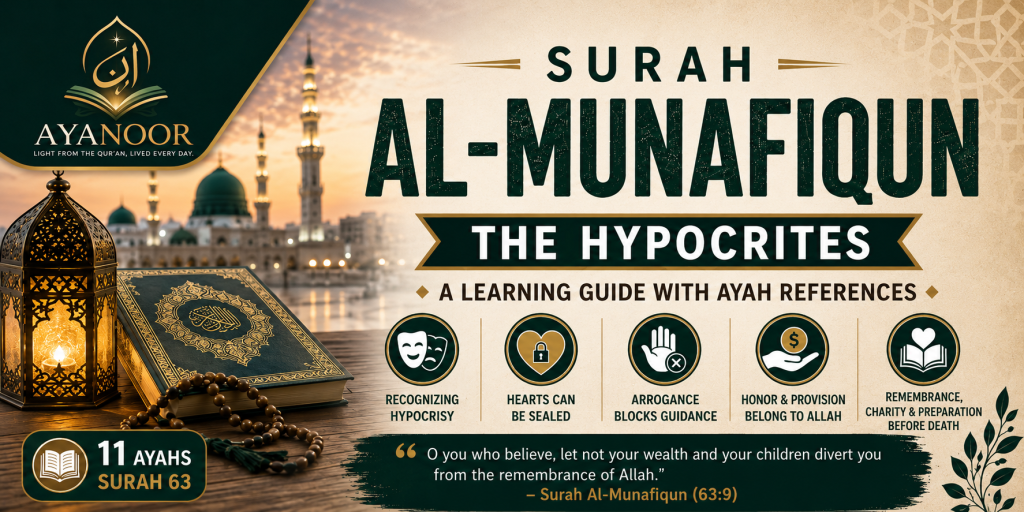
Surah Al-Munafiqun is the 63rd chapter of the Qur’an, consisting of 11 ayahs. Revealed in Madinah, the Surah exposes the characteristics of hypocrisy, warns believers against spiritual insincerity, and reminds humanity that true honor belongs to Allah alone.
The Surah is deeply relevant today because it teaches believers to focus not only on outward appearance, but also on sincerity, honesty, humility, and remembrance of Allah.
Background of the Surah
The Surah was revealed regarding certain individuals in Madinah who outwardly claimed to support Islam but secretly worked against the Muslim community. They spoke with impressive words and appearances, but their hearts lacked sincerity.
Rather than merely naming individuals, the Qur’an focuses on the qualities of hypocrisy so believers can reflect upon themselves and protect their hearts.
1. Outward Words Do Not Guarantee True Faith
“When the hypocrites come to you, they say, ‘We testify that you are indeed the Messenger of Allah.’ And Allah knows that you are truly His Messenger, and Allah testifies that the hypocrites are liars.”
— Ayah 1
Lessons
- Faith is not just verbal.
- Allah knows what is hidden inside hearts.
- A person can say correct words while carrying insincerity internally.
Reflection
Islam teaches believers to align:
- Words
- Intentions
- Actions
A believer should strive to be truthful privately and publicly.
2. Hypocrisy Becomes a Barrier to Guidance
“They have taken their oaths as a cover, so they turned people away from the path of Allah.”
— Ayah 2
“That is because they believed, then disbelieved; so their hearts were sealed, and they do not understand.”
— Ayah 3
Lessons
- Repeated dishonesty darkens the heart.
- Pretending righteousness can eventually damage spiritual understanding.
- Hypocrisy harms both the individual and society.
Reflection
A person should constantly renew sincerity through:
- Prayer
- Repentance
- Self-accountability
- Honest intentions
3. Outward Appearance Can Be Misleading
“And when you see them, their appearance pleases you, and if they speak, you listen to their speech…”
— Ayah 4
Allah then compares them to hollow pieces of wood leaning against a wall.
Lessons
- Appearance, eloquence, and confidence do not always reflect sincerity.
- Islam teaches believers to value character over image.
- A spiritually empty heart cannot be filled by outward success alone.
Reflection
Modern society often overvalues:
- Fame
- Presentation
- Influence
- Public image
The Qur’an reminds believers to prioritize sincerity and integrity.
4. Arrogance Prevents Repentance
“And when it is said to them, ‘Come, so that the Messenger of Allah may seek forgiveness for you,’ they turn their heads aside…”
— Ayah 5
“It is the same whether you seek forgiveness for them or do not seek forgiveness for them…”
— Ayah 6
Lessons
- Pride can prevent a person from accepting truth.
- One of the signs of sincerity is the willingness to admit mistakes.
- Guidance requires humility.
Reflection
A believer should never feel too proud to:
- Apologize
- Repent
- Accept advice
- Correct wrong behavior
5. Wealth and Influence Do Not Control Provision
The hypocrites attempted to pressure the believers economically.
“They are the ones who say, ‘Do not spend on those who are with the Messenger of Allah until they disperse.’ But to Allah belong the treasures of the heavens and the earth…”
— Ayah 7
Lessons
- Provision comes from Allah alone.
- Wealth should not become a weapon of manipulation.
- Generosity strengthens communities.
Reflection
Believers should:
- Support one another
- Avoid selfishness
- Trust Allah during financial hardship
6. True Honor Belongs to Allah
“They say, ‘If we return to Madinah, surely the more honorable will expel the weaker from it.’ But honor belongs to Allah, His Messenger, and the believers…”
— Ayah 8
Lessons
- Real dignity does not come from wealth, status, or power.
- Allah grants true honor through faith and righteousness.
- Arrogance blinds people from reality.
Reflection
The world often measures success by:
- Position
- Popularity
- Money
- Social influence
The Qur’an teaches that true honor is spiritual, moral, and eternal.
7. Do Not Let Worldly Life Distract You From Allah
The Surah then turns directly toward believers with an important warning.
“O believers! Do not let your wealth or your children distract you from the remembrance of Allah…”
— Ayah 9
Lessons
- Family and wealth are blessings, but they can become distractions.
- Spiritual neglect often begins gradually.
- Remembrance of Allah protects the heart.
Reflection
Modern distractions include:
- Endless entertainment
- Social media obsession
- Material competition
- Constant busyness
Believers need regular spiritual reconnection.
8. Spend and Prepare Before Death Arrives
“And spend from what We have provided you before death comes to one of you…”
— Ayah 10
The Surah ends with a powerful reminder:
“But Allah will never delay a soul when its appointed time has come…”
— Ayah 11
Lessons
- Life is temporary.
- Good deeds should not be delayed.
- Charity and repentance must happen while opportunities still exist.
Reflection
Many people postpone:
- Charity
- Worship
- Reconciliation
- Qur’an learning
- Helping others
The Surah reminds believers that time is limited and precious.
Major Themes of Surah Al-Munafiqun
| Theme | Ayah Reference |
| False testimony and hypocrisy | 1 |
| Hearts becoming sealed | 2–3 |
| Outward appearance vs inner sincerity | 4 |
| Arrogance blocking repentance | 5–6 |
| Wealth and provision belong to Allah | 7 |
| True honor belongs to Allah | 8 |
| Avoiding distraction from Allah | 9 |
| Preparing before death | 10–11 |
Practical Lessons for Daily Life
Personal Growth
- Be sincere in speech and worship.
- Regularly examine your intentions.
- Avoid double standards between public and private life.
Family & Society
- Use wealth to help, not control.
- Build relationships based on honesty and compassion.
- Avoid arrogance and pride.
Spiritual Life
- Increase remembrance of Allah daily.
- Make repentance a regular habit.
- Do not delay good deeds.
Self-Reflection Questions
- Am I the same person privately and publicly?
- Does pride stop me from admitting mistakes?
- Have worldly distractions weakened my spirituality?
- Do I practice what I preach?
- Am I preparing for the Hereafter?
Final Reflection
The Quran teaches believers that the greatest danger is not merely external opposition, but inner insincerity and spiritual corruption. Allah is fully aware of every hidden intention, every word, and every action.
The Surah calls believers to:
- Live honestly
- Remain humble
- Remember Allah consistently
- Avoid arrogance and deception
- Prepare sincerely for the Hereafter
True faith is not only spoken by the tongue — it is lived through sincerity, humility, and righteous action every day.
Leave a Reply