

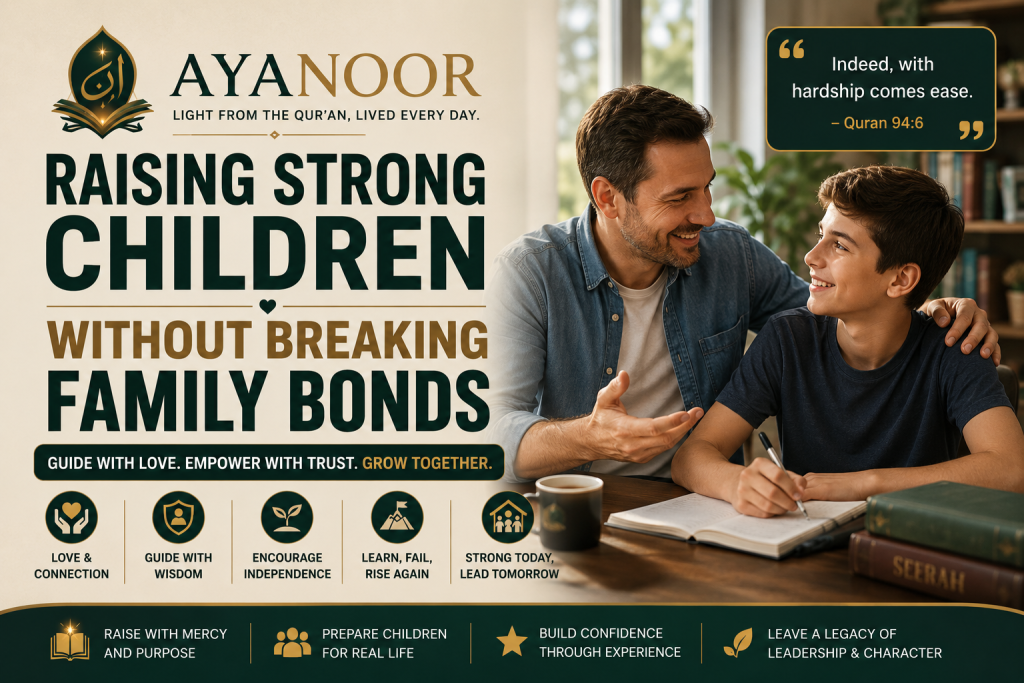
Across many families and cultures, parents deeply love their children and want to protect them from pain, hardship, disappointment, and failure. This love is natural and beautiful. Mothers and fathers sacrifice their comfort, sleep, health, and dreams to provide safety and stability for their families.
But sometimes, without realizing it, love can become overprotection.
In many homes, especially within traditional family systems, children are not encouraged to make decisions, express opinions, take responsibility, or experience failure on their own. Every major choice is controlled by the head of the family, often with good intentions. Parents may believe they are protecting their children from mistakes, yet over time this can unintentionally weaken confidence, independence, and leadership within the next generation.
A child who is never allowed to struggle may grow older physically while remaining emotionally dependent and uncertain.
This discussion is not about rebellion against parents, disrespect, or abandoning family values. In fact, strong family bonds are among the greatest blessings Allah has given humanity. The goal is not separation from family, but healthy growth within family.
Children should remain emotionally connected to their parents while also becoming capable, confident, responsible human beings.
The Quran repeatedly reminds us that growth often comes through effort and struggle.
“Indeed, with hardship comes ease.”
— Quran 94:6
Allah could have created human beings fully developed and independent from the beginning, but instead He created life as a gradual process. A child first learns to crawl, then stand, then walk — falling repeatedly along the way. Parents do not stop the child from trying because they fear the child may fall. Rather, they remain nearby with love, encouragement, and protection while allowing the child to grow stronger through experience.
This is one of the most beautiful lessons in parenting:
support without suffocation.
Every meaningful achievement in life usually comes after struggle:
- learning,
- leadership,
- marriage,
- work,
- parenting,
- emotional maturity,
- and responsibility.
A person who never experiences challenge may struggle greatly when real life demands strength and decision-making.
This becomes especially difficult when the father or central authority figure passes away. In some families, no one has been prepared emotionally or practically to lead, guide, or carry responsibility. Children may remain dependent for so long that they fear making even basic decisions confidently.
Strong parents do not merely control families. They prepare future generations.
A wise father:
- advises,
- listens,
- encourages,
- and gradually hands responsibility to his children.
A wise mother:
- nurtures confidence,
- allows growth,
- and emotionally supports her children through both success and failure.
Children who feel trusted often become stronger, wiser, and more responsible.
Failure itself should not be treated as disaster. Sometimes failure becomes one of life’s greatest teachers. A child who tries, falls, learns, and rises again often develops resilience, humility, patience, and courage.
Parents must understand that constantly preventing struggle may also prevent growth.
At the same time, children should remember that confidence must never turn into arrogance or disrespect. Independence should not destroy mercy, gratitude, or closeness with parents. Healthy families are built when generations support one another with compassion, wisdom, and mutual respect.
Modern society already struggles with emotional fragmentation, loneliness, and weakening family bonds. The solution is not to create emotionally distant families, nor overly controlled families. The healthier path lies somewhere in between:
- emotionally connected,
- spiritually grounded,
- compassionate,
- and capable families.
Children should grow up knowing:
- “My parents love me.”
- “My parents trust me.”
- “My parents prepared me for life.”
And parents should grow older knowing they raised children who are:
- kind,
- responsible,
- emotionally mature,
- and able to lead with wisdom and mercy.
Strong societies are not built only through wealth or education. They are built through healthy homes where love, responsibility, confidence, and compassion grow together.
Perhaps one of the greatest gifts parents can give their children is not only protection from life’s hardships, but also the strength and confidence to face life with faith, resilience, and courage.