

Introduction
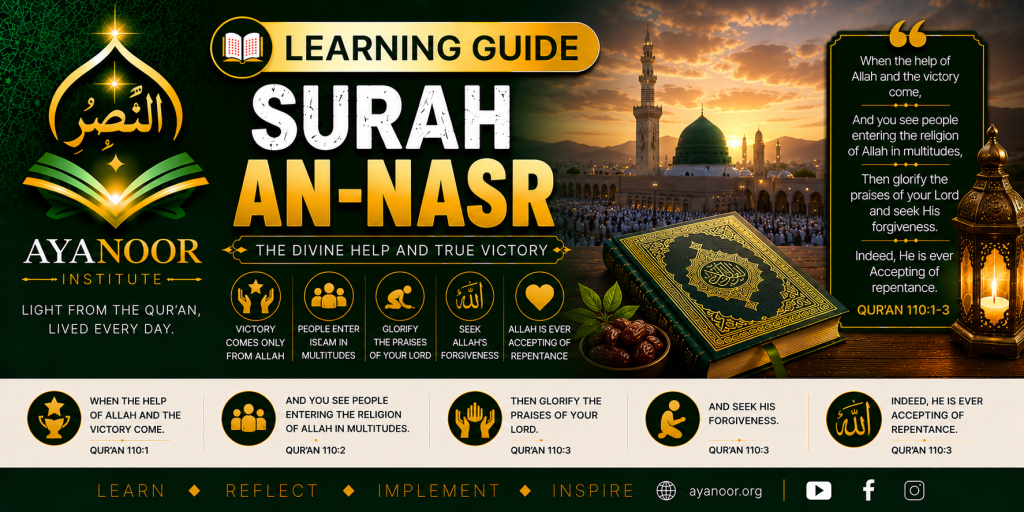
Surah An-Nasr is the 110th chapter of the Qur’an and was revealed in Madinah. The word An-Nasr means “The Help” or “The Victory.” This surah was revealed near the end of the life of Prophet Muhammad ﷺ after the peaceful conquest of Makkah, when large numbers of people were entering Islam.
Although the surah speaks about victory and success, its central message is humility, gratitude, worship, and seeking forgiveness. It teaches believers that every success comes from Allah and that moments of achievement should increase remembrance, sincerity, and repentance.
Surah An-Nasr reminds humanity that true victory is spiritual — not merely political or worldly.
1. Victory Comes from Allah
The surah begins:
“When the help of Allah and the victory come.”
— Qur’an 110:1
Lessons
- All success and victory come from Allah alone.
- Human effort matters, but divine help determines outcomes.
- Believers should remain humble during success.
Related Qur’anic References
- “Victory is only from Allah.” — Qur’an 3:126
- “If Allah helps you, none can overcome you.” — Qur’an 3:160
2. People Entering Islam in Crowds
Allah says:
“And you see people entering the religion of Allah in multitudes.”
— Qur’an 110:2
Lessons
- Truth naturally attracts hearts over time.
- Patience and perseverance eventually bear fruit.
- Guidance belongs to Allah, not human force.
Related Qur’anic References
- “There is no compulsion in religion.” — Qur’an 2:256
- “You do not guide whom you love, but Allah guides whom He wills.” — Qur’an 28:56
3. Success Should Increase Worship
Allah commands:
“Then glorify the praises of your Lord.”
— Qur’an 110:3
Lessons
- Success should bring believers closer to Allah.
- Gratitude is expressed through worship and remembrance.
- Arrogance after achievement weakens spirituality.
Related Qur’anic References
- “If you are grateful, I will surely increase you.” — Qur’an 14:7
- “Remember Me; I will remember you.” — Qur’an 2:152
4. Seek Forgiveness Even During Victory
Allah says:
“And seek His forgiveness.”
— Qur’an 110:3
Lessons
- Even the righteous seek forgiveness constantly.
- Spiritual humility protects the heart from pride.
- Believers should recognize their imperfections.
Related Qur’anic References
- “Indeed Allah loves those who repent.” — Qur’an 2:222
- “Seek forgiveness of your Lord.” — Qur’an 71:10
5. Allah is Always Accepting of Repentance
The surah concludes:
“Indeed, He is ever Accepting of repentance.”
— Qur’an 110:3
Lessons
- Allah’s mercy is always open.
- Repentance is part of spiritual growth.
- No believer should despair of Allah’s forgiveness.
Related Qur’anic References
- “Do not despair of the mercy of Allah.” — Qur’an 39:53
- “Allah accepts repentance from His servants.” — Qur’an 42:25
6. Humility During Achievement
This surah was revealed during one of the greatest victories in Islamic history, yet Allah commanded humility instead of celebration through pride.
Lessons
- Success should not create arrogance.
- Leadership requires humility and gratitude.
- The higher a person rises, the more humble they should become.
Related Qur’anic References
- “Do not walk upon the earth arrogantly.” — Qur’an 17:37
- “Indeed Allah does not love the arrogant.” — Qur’an 16:23
7. The Completion of the Prophet’s Mission
Many companions understood this surah as a sign that the mission of Prophet Muhammad ﷺ was nearing completion.
Lessons
- Every mission and life journey eventually reaches its end.
- Believers should focus on leaving behind goodness and sincerity.
- The ending of one chapter may begin another.
Related Qur’anic References
- “Today I have perfected your religion for you.” — Qur’an 5:3
- “Every soul shall taste death.” — Qur’an 3:185
8. Spiritual Victory is Greater Than Worldly Victory
The surah emphasizes worship and repentance more than political success.
Lessons
- Real victory is guidance, faith, and closeness to Allah.
- Spiritual growth matters more than fame or power.
- Success without gratitude can become a test.
Related Qur’anic References
- “The Hereafter is better and more lasting.” — Qur’an 87:17
- “Indeed the most noble among you is the most righteous.” — Qur’an 49:13
Key Themes of Surah An-Nasr
1. Victory Comes From Allah
Human success depends upon divine help.
2. Gratitude and Worship
Achievements should increase remembrance and humility.
3. Repentance and Forgiveness
Believers should seek forgiveness constantly.
4. Humility in Leadership
True leaders remain humble during success.
5. Spiritual Success
The greatest victory is closeness to Allah.
Reflection Questions
- How do we respond when Allah grants success?
- Does achievement increase our gratitude and worship?
- Are we seeking forgiveness regularly?
- Do we remain humble during moments of praise and victory?
- What kind of spiritual legacy are we building?
Practical Action Points
- Thank Allah sincerely after every achievement.
- Increase prayer, dhikr, and gratitude daily.
- Seek forgiveness consistently.
- Avoid pride and arrogance during success.
- Use influence and blessings to benefit others.
- Reflect regularly on Allah’s mercy and guidance.
Conclusion
Surah An-Nasr is a beautiful reminder that all victory and success come from Allah alone. Rather than celebrating achievement with pride, Allah teaches believers to respond with humility, gratitude, worship, and repentance.
The surah reminds humanity that true success is not worldly power or recognition, but a heart connected to Allah through sincerity, humility, and constant remembrance. Through gratitude and repentance, believers can transform success into a means of spiritual elevation and closeness to Allah.