

Introduction
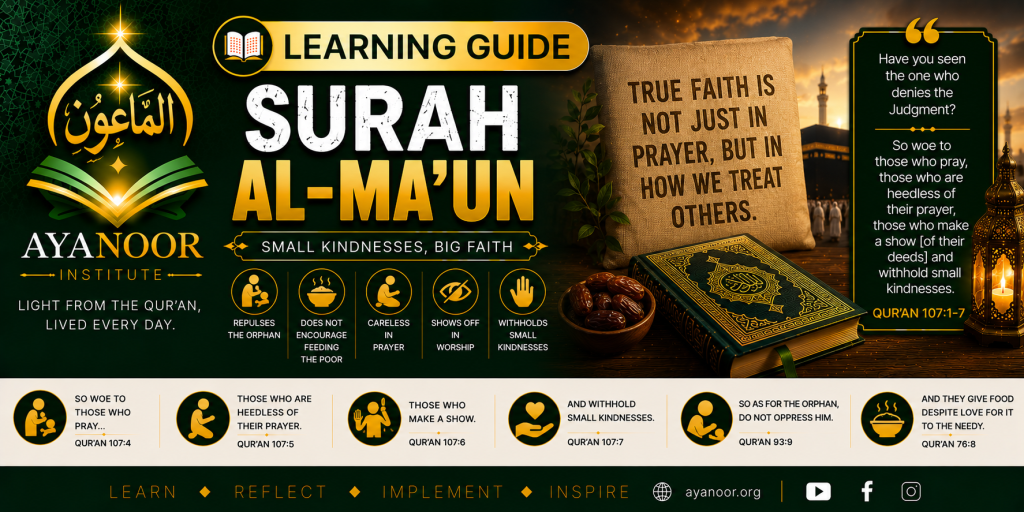
Surah Al-Ma‘un is the 107th chapter of the Qur’an and was revealed in Makkah. The word Al-Ma‘un refers to small acts of kindness, simple assistance, or everyday help that people provide to one another.
This powerful surah connects worship with character and social responsibility. It warns against hypocrisy, neglect of prayer, mistreatment of orphans, lack of concern for the poor, and refusing even small acts of kindness.
Surah Al-Ma‘un teaches that true faith is not limited to rituals alone — it must be reflected in compassion, sincerity, generosity, and service to others.
1. Denying the Reality of Judgment
The surah begins:
“Have you seen the one who denies the Judgment?”
— Qur’an 107:1
Lessons
- Actions reveal the true condition of the heart.
- Neglecting morality often reflects weak belief in accountability.
- Faith in the Hereafter should transform behavior.
Related Qur’anic References
- “The Day every soul will find what it did present.” — Qur’an 3:30
- “Whoever hopes to meet his Lord, let him do righteous deeds.” — Qur’an 18:110
2. Harshness Toward Orphans
Allah says:
“For that is the one who repulses the orphan.”
— Qur’an 107:2
Lessons
- Islam places great emphasis on protecting vulnerable people.
- Mistreating or neglecting orphans hardens the heart.
- Compassion is a sign of sincere faith.
Related Qur’anic References
- “So as for the orphan, do not oppress him.” — Qur’an 93:9
- “They ask you concerning orphans. Say: improving their condition is best.” — Qur’an 2:220
3. Neglecting the Poor
Allah says:
“And does not encourage the feeding of the poor.”
— Qur’an 107:3
Lessons
- Caring for the needy is a core Islamic value.
- Believers should actively encourage generosity.
- A selfish society loses mercy and compassion.
Related Qur’anic References
- “And they give food despite love for it to the needy.” — Qur’an 76:8
- “Have you seen the one who denies the religion? It is he who repulses the orphan.” — Qur’an 107:1-2
4. Warning to Those Who Pray Carelessly
Allah says:
“So woe to those who pray.”
— Qur’an 107:4
The warning is not against prayer itself, but against hypocrisy and carelessness in worship.
Lessons
- Prayer should transform the heart and behavior.
- Worship without sincerity loses its spiritual effect.
- Islam connects prayer with morality and compassion.
Related Qur’anic References
- “Indeed prayer prevents immorality and wrongdoing.” — Qur’an 29:45
- “Successful indeed are the believers who are humble in their prayers.” — Qur’an 23:1-2
5. Those Neglectful of Prayer
Allah says:
“Those who are heedless of their prayer.”
— Qur’an 107:5
Lessons
- Delaying or neglecting prayer weakens spiritual connection.
- Rituals should not become empty habits.
- Mindfulness and sincerity are essential in worship.
Related Qur’anic References
- “Guard strictly the prayers.” — Qur’an 2:238
- “Establish prayer for My remembrance.” — Qur’an 20:14
6. Showing Off in Worship
Allah says:
“Those who make a show.”
— Qur’an 107:6
Lessons
- Worship should be done for Allah alone.
- Seeking praise from people corrupts sincerity.
- Hidden sincere deeds are beloved to Allah.
Related Qur’anic References
- “They were only commanded to worship Allah sincerely.” — Qur’an 98:5
- “So whoever hopes to meet his Lord, let him not associate anyone in worship.” — Qur’an 18:110
7. Refusing Small Acts of Kindness
Allah concludes:
“And they withhold small kindnesses.”
— Qur’an 107:7
Lessons
- Even small acts of kindness matter greatly in Islam.
- Faith should make believers helpful and generous.
- Simple assistance strengthens communities and relationships.
Related Qur’anic References
- “Whoever does an atom’s weight of good will see it.” — Qur’an 99:7
- “Speak kindly to people.” — Qur’an 2:83
8. Faith Must Reflect in Character
Although the surah is brief, it powerfully connects belief with conduct.
Lessons
- Islam is both worship and social responsibility.
- True religiosity includes kindness, honesty, and compassion.
- Harshness and selfishness contradict sincere faith.
Related Qur’anic References
- “Indeed the most noble of you in the sight of Allah is the most righteous.” — Qur’an 49:13
- “The believers are but brothers.” — Qur’an 49:10
Key Themes of Surah Al-Ma‘un
1. Compassion for the Vulnerable
Faith requires care for orphans and the poor.
2. Sincerity in Worship
Prayer should be meaningful and sincere.
3. The Danger of Hypocrisy
Showing off in worship destroys sincerity.
4. Social Responsibility
Believers should help others actively.
5. The Value of Small Kindnesses
Even small acts carry great spiritual weight.
Reflection Questions
- Does our worship improve our character and behavior?
- Are we helping those in need around us?
- How sincere are our prayers and good deeds?
- Do we overlook “small kindnesses” in daily life?
- Are we compassionate toward vulnerable people?
Practical Action Points
- Pray with focus, humility, and sincerity.
- Support orphans, widows, and the needy regularly.
- Perform small acts of kindness daily.
- Avoid showing off good deeds publicly.
- Encourage generosity within family and community.
- Reflect on whether actions match faith.
Conclusion
Surah Al-Ma‘un is a powerful reminder that true faith must appear in both worship and character. The surah warns against hypocrisy, neglect of prayer, selfishness, and indifference toward those in need.
It teaches believers that sincere worship should produce compassion, humility, generosity, and kindness — even in the smallest daily actions. Through prayer, sincerity, and service to humanity, believers can strengthen both their relationship with Allah and their impact upon society.