

Introduction
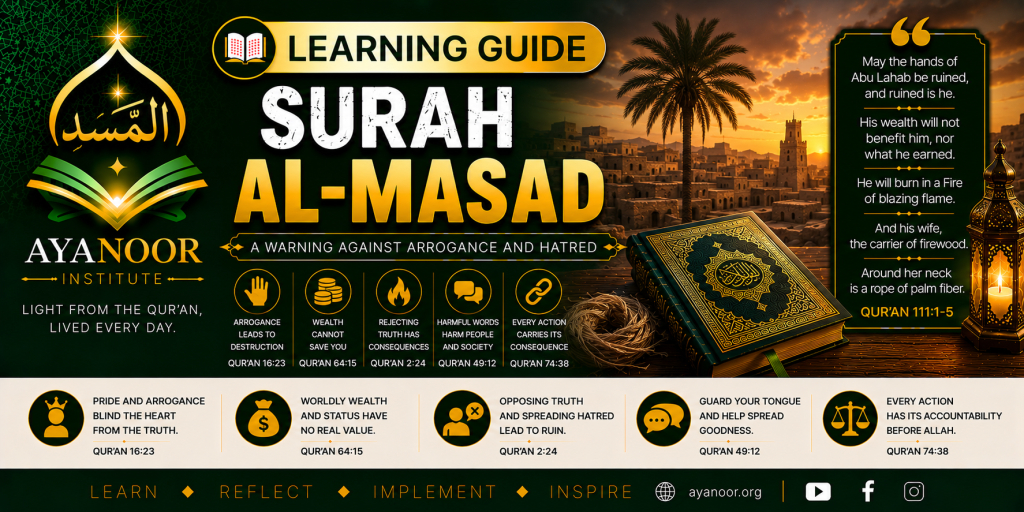
Surah Al-Masad is the 111th chapter of the Qur’an and was revealed in Makkah. It is also known as Surah Al-Lahab, referring to Abu Lahab, one of the fiercest opponents of Prophet Muhammad ﷺ.
This surah is unique because it directly addresses a historical figure who used his wealth, influence, and status to oppose truth, spread hatred, and harm the message of Islam. Allah revealed this chapter as a warning that worldly power, pride, and hostility toward truth cannot save a person from accountability.
Surah Al-Masad teaches powerful lessons about arrogance, misuse of wealth, opposition to truth, personal responsibility, and the reality that honor comes only through faith and righteousness.
1. The Failure of Arrogance
The surah begins:
“May the hands of Abu Lahab be ruined, and ruined is he.”
— Qur’an 111:1
Lessons
- Pride and hostility toward truth lead to destruction.
- Status and influence do not guarantee success before Allah.
- Arrogance blinds people from guidance.
Related Qur’anic References
- “Indeed Allah does not love the arrogant.” — Qur’an 16:23
- “Do not walk upon the earth arrogantly.” — Qur’an 17:37
2. Wealth Cannot Save a Person
Allah says:
“His wealth will not benefit him, nor what he earned.”
— Qur’an 111:2
Lessons
- Wealth alone cannot protect anyone from accountability.
- Material success without faith is temporary.
- Believers should use wealth responsibly and humbly.
Related Qur’anic References
- “Your wealth and children are only a test.” — Qur’an 64:15
- “The worldly life is only enjoyment of delusion.” — Qur’an 3:185
3. The Consequence of Rejecting Truth
Allah says:
“He will burn in a Fire of blazing flame.”
— Qur’an 111:3
Lessons
- Persistent rejection of truth carries consequences.
- Allah’s warnings are acts of mercy meant to guide people.
- The Hereafter is a reality that should shape human behavior.
Related Qur’anic References
- “Fear the Fire whose fuel is people and stones.” — Qur’an 2:24
- “Indeed your Lord is severe in punishment.” — Qur’an 85:12
4. Harmful Influence and Support for Evil
Allah says:
“And his wife, the carrier of firewood.”
— Qur’an 111:4
The wife of Abu Lahab also actively supported hostility and harm against the Prophet ﷺ.
Lessons
- Supporting injustice and spreading harm are serious sins.
- People influence one another positively or negatively.
- Families and communities should encourage righteousness.
Related Qur’anic References
- “Help one another in righteousness and piety.” — Qur’an 5:2
- “Do not cooperate in sin and aggression.” — Qur’an 5:2
5. Spreading Harm Through Words and Actions
The phrase “carrier of firewood” also symbolizes spreading conflict, rumors, and hatred.
Lessons
- Gossip, slander, and spreading division destroy societies.
- Words can either heal or harm deeply.
- Believers should use speech responsibly.
Related Qur’anic References
- “Do not backbite one another.” — Qur’an 49:12
- “Speak kindly to people.” — Qur’an 2:83
6. Chains and Consequences
Allah says:
“Around her neck is a rope of palm fiber.”
— Qur’an 111:5
Lessons
- Every action carries consequences.
- The punishment reflects the nature of the wrongdoing.
- People become trapped by their own arrogance and hatred.
Related Qur’anic References
- “Every soul will be held in pledge for what it earned.” — Qur’an 74:38
- “Whoever does an atom’s weight of evil will see it.” — Qur’an 99:8
7. Bloodline and Family Cannot Guarantee Salvation
Abu Lahab was the uncle of Prophet Muhammad ﷺ, yet his family relationship did not benefit him spiritually.
Lessons
- Guidance depends on faith and sincerity, not lineage.
- Every individual is personally accountable before Allah.
- True honor comes from righteousness.
Related Qur’anic References
- “Indeed the most noble of you in the sight of Allah is the most righteous.” — Qur’an 49:13
- “No bearer of burdens shall bear the burden of another.” — Qur’an 6:164
8. The Triumph of Truth
Despite Abu Lahab’s efforts, Islam spread across the world while his opposition became a lesson for future generations.
Lessons
- Truth ultimately prevails by Allah’s will.
- Opposition and mockery cannot stop divine guidance.
- Patience and sincerity bring lasting success.
Related Qur’anic References
- “They wish to extinguish the light of Allah, but Allah will perfect His light.” — Qur’an 61:8
- “Indeed We are sufficient for you against the mockers.” — Qur’an 15:95
Key Themes of Surah Al-Masad
1. Arrogance Leads to Destruction
Pride and hostility toward truth blind the heart.
2. Wealth Cannot Save a Person
Material success has no value without faith.
3. Accountability in the Hereafter
Every action and intention carries consequences.
4. The Danger of Harmful Speech
Spreading hatred and division harms society.
5. Truth Ultimately Prevails
Allah protects and elevates truth.
Reflection Questions
- Are we using our blessings in ways that please Allah?
- Do we ever allow pride to prevent self-reflection?
- How do our words affect people around us?
- Are we supporting goodness or contributing to negativity?
- What kind of legacy are we leaving behind?
Practical Action Points
- Practice humility and gratitude daily.
- Use wealth responsibly and generously.
- Avoid gossip, slander, and harmful speech.
- Support truth, justice, and kindness.
- Reflect on the temporary nature of worldly power.
- Seek forgiveness regularly and sincerely.
Conclusion
Surah Al-Masad is a powerful reminder that arrogance, hatred, and misuse of wealth cannot protect a person from accountability before Allah. The surah teaches that true honor comes not from status or family ties, but from sincerity, faith, humility, and righteousness.
It warns against spreading harm and opposing truth while reminding believers that Allah ultimately supports what is right. Through humility, good character, and sincere worship, believers can avoid the spiritual destruction that pride and hostility bring.