

Introduction
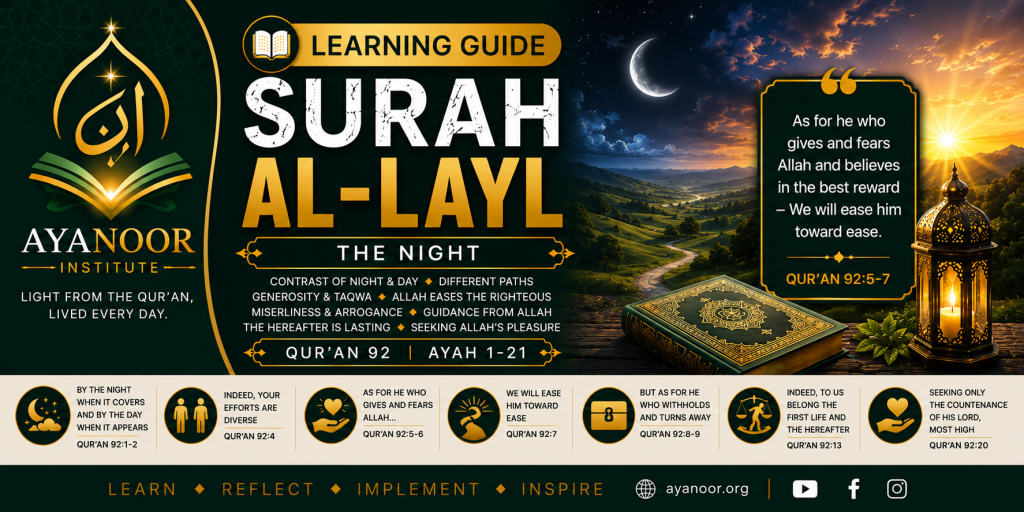
Surah Al-Layl is the 92nd chapter of the Qur’an and was revealed in Makkah. The word Al-Layl means “The Night.” The surah begins with powerful oaths by the night, the day, and the creation of male and female, highlighting the contrast and balance present throughout Allah’s creation.
This surah teaches that human beings follow different paths in life — some choose generosity, faith, and righteousness, while others choose selfishness, denial, and arrogance. Allah explains that every choice leads toward a different outcome in this life and the Hereafter.
Surah Al-Layl is a deeply motivational chapter about sincerity, charity, sacrifice, guidance, and striving for eternal success.
1. Allah Swears by the Night and the Day
The surah opens:
“By the night when it covers, and by the day when it appears.”
— Qur’an 92:1-2
Allah also swears by the creation of male and female.
Lessons
- The universe reflects balance and wisdom.
- Night and day symbolize contrast and purpose.
- Human beings are also divided by the paths they choose.
Related Qur’anic References
- “And among His signs are the night and the day.” — Qur’an 41:37
- “And We created you in pairs.” — Qur’an 78:8
2. Human Efforts Are Different
Allah says:
“Indeed, your efforts are diverse.”
— Qur’an 92:4
Every person lives for different goals and values.
Lessons
- Human beings shape their future through choices and actions.
- Some strive for Allah, while others chase temporary desires.
- Intentions matter deeply in Islam.
Related Qur’anic References
- “Whoever desires the Hereafter and strives for it.” — Qur’an 17:19
- “Every soul is held in pledge for what it earned.” — Qur’an 74:38
3. The Path of Generosity and Taqwa
Allah says:
“As for he who gives and fears Allah and believes in the best reward.”
— Qur’an 92:5-6
These are the qualities of believers who seek Allah sincerely.
Lessons
- Generosity purifies the heart.
- Taqwa leads to spiritual ease and guidance.
- Belief in the Hereafter motivates righteous action.
Related Qur’anic References
- “Whatever good you send forth for yourselves, you will find it with Allah.” — Qur’an 2:110
- “Those who spend in ease and hardship.” — Qur’an 3:134
4. Allah Makes the Path Easier for the Righteous
Allah promises:
“We will ease him toward ease.”
— Qur’an 92:7
Allah helps sincere believers move toward goodness and spiritual success.
Lessons
- Obedience brings inner peace and clarity.
- Allah supports those striving toward righteousness.
- Small sincere actions open doors to greater goodness.
Related Qur’anic References
- “And whoever fears Allah — He will make for him a way out.” — Qur’an 65:2
- “Indeed Allah is with those who fear Him.” — Qur’an 16:128
5. The Path of Miserliness and Arrogance
Allah contrasts another group:
“But as for he who withholds and considers himself self-sufficient.”
— Qur’an 92:8
These are people who become attached to wealth and reject guidance.
Lessons
- Pride distances people from Allah.
- Selfishness darkens the soul.
- Wealth without gratitude becomes a test and burden.
Related Qur’anic References
- “Indeed man transgresses because he sees himself self-sufficient.” — Qur’an 96:6-7
- “Competition in worldly increase distracts you.” — Qur’an 102:1
6. Allah Makes the Path Difficult for Those Who Reject Truth
Allah says:
“We will ease him toward hardship.”
— Qur’an 92:10
A life away from Allah eventually becomes spiritually heavy and empty.
Lessons
- Sin creates spiritual darkness.
- Rejecting truth leads to hardship in this life and the Hereafter.
- Guidance requires humility and sincerity.
Related Qur’anic References
- “Whoever turns away from My remembrance will have a depressed life.” — Qur’an 20:124
- “Allah does not guide the arrogant.” — Qur’an 16:23
7. Wealth Cannot Save a Person
Allah warns:
“And what will his wealth avail him when he falls?”
— Qur’an 92:11
Material possessions cannot save a person from accountability before Allah.
Lessons
- Wealth is temporary.
- Faith and righteous deeds are what truly benefit a person.
- Attachment to dunya can become spiritually dangerous.
Related Qur’anic References
- “Neither wealth nor children will benefit except one who comes to Allah with a sound heart.” — Qur’an 26:88-89
- “The worldly life is only enjoyment of delusion.” — Qur’an 57:20
8. Guidance Belongs to Allah
Allah says:
“Indeed, upon Us is guidance.”
— Qur’an 92:12
Allah sent revelation, prophets, and signs to guide humanity.
Lessons
- Guidance is a mercy from Allah.
- The Qur’an provides clarity and direction.
- Believers should constantly seek guidance through prayer and reflection.
Related Qur’anic References
- “Indeed this Qur’an guides to that which is most upright.” — Qur’an 17:9
- “Guide us to the straight path.” — Qur’an 1:6
9. Allah Owns This Life and the Hereafter
Allah says:
“And indeed to Us belongs the Hereafter and the first life.”
— Qur’an 92:13
Everything belongs ultimately to Allah.
Lessons
- This world is temporary and limited.
- The Hereafter is eternal and lasting.
- Believers should live with long-term spiritual vision.
Related Qur’anic References
- “To Allah belongs the dominion of the heavens and earth.” — Qur’an 57:2
- “The Hereafter is better and more lasting.” — Qur’an 87:17
10. Warning About the Fire
Allah warns humanity:
“So I have warned you of a blazing Fire.”
— Qur’an 92:14
This warning is part of Allah’s mercy before punishment comes.
Lessons
- Accountability is real.
- Believers should fear Allah while hoping in His mercy.
- The Qur’an balances warning with hope.
Related Qur’anic References
- “Fear the Fire prepared for the disbelievers.” — Qur’an 3:131
- “My mercy encompasses all things.” — Qur’an 7:156
11. The Righteous Seek Only Allah’s Pleasure
Allah describes the sincere believer:
“Seeking only the countenance of his Lord, Most High.”
— Qur’an 92:20
True believers act sincerely for Allah alone.
Lessons
- Sincerity gives deeds value.
- Worship should not be driven by pride or recognition.
- The highest goal is Allah’s pleasure.
Related Qur’anic References
- “They feed others seeking only the Face of Allah.” — Qur’an 76:9
- “Indeed actions are judged by intentions.” — Hadith
12. The Believer Will Be Pleased
The surah ends beautifully:
“And surely he will be pleased.”
— Qur’an 92:21
Allah promises deep satisfaction and reward for sincere believers.
Lessons
- True peace comes through closeness to Allah.
- Eternal happiness belongs to the righteous.
- Every sacrifice for Allah carries reward.
Related Qur’anic References
- “Allah is pleased with them and they are pleased with Him.” — Qur’an 98:8
- “No fear will there be upon them, nor will they grieve.” — Qur’an 2:62
Key Themes of Surah Al-Layl
1. The Contrast Between Different Paths
People choose different goals and destinies.
2. Generosity and Taqwa
Giving sincerely leads toward ease and success.
3. The Danger of Pride and Miserliness
Attachment to wealth corrupts the heart.
4. Divine Guidance
Allah provides guidance through revelation.
5. The Temporary Nature of Dunya
Only the Hereafter is lasting.
6. Sincerity for Allah Alone
Pure intentions are central to faith.
Reflection Questions
- Which path are we striving toward in daily life?
- Are we using wealth and blessings for Allah’s sake?
- How sincere are our actions and intentions?
- Are worldly distractions weakening our spirituality?
- What can we do to strengthen generosity and taqwa?
Practical Action Points
- Give charity regularly, even in small amounts.
- Increase sincerity in worship and daily actions.
- Reflect on the temporary nature of worldly life.
- Ask Allah constantly for guidance.
- Practice gratitude and generosity.
- Focus on earning Allah’s pleasure over people’s praise.
Conclusion
Surah Al-Layl is a powerful reminder that every human being chooses a path through life — either toward generosity, faith, sincerity, and eternal ease, or toward selfishness, arrogance, and spiritual loss.
The surah teaches that true success belongs to those who give sincerely, seek Allah’s pleasure, and prepare for the Hereafter with humility, taqwa, and compassion.