

Introduction
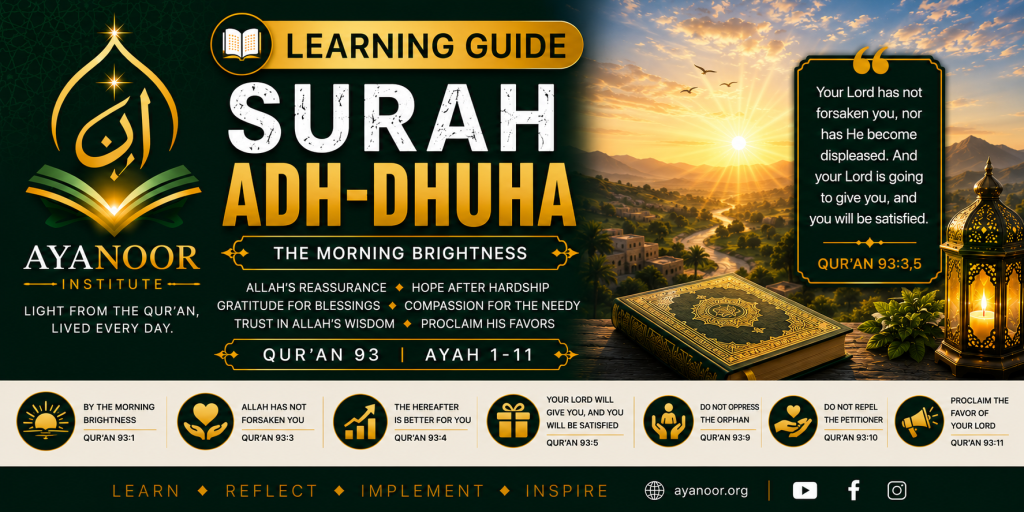
Surah Ad-Dhuha is the 93rd chapter of the Qur’an and was revealed in Makkah. The word Ad-Dhuha means “The Morning Brightness” or “The Bright Morning Light.” This beautiful and comforting surah was revealed during a period when revelation temporarily paused, and the Prophet Muhammad ﷺ felt sadness and concern.
Allah revealed this surah as a message of reassurance, mercy, hope, and emotional healing. It reminds believers that Allah never abandons His servants and that hardship is followed by ease and divine care.
Surah Ad-Dhuha is one of the most emotionally uplifting chapters of the Qur’an, teaching gratitude, compassion for others, hope during hardship, and trust in Allah’s wisdom.
1. Allah Swears by the Morning Light
The surah begins:
“By the morning brightness.”
— Qur’an 93:1
Allah also swears by the stillness of the night.
Lessons
- Light after darkness is part of Allah’s design.
- Difficult periods are temporary.
- Just as night passes, hardship also passes.
Related Qur’anic References
- “Indeed with hardship comes ease.” — Qur’an 94:5-6
- “Allah brings the living out of the dead and the dead out of the living.” — Qur’an 30:19
2. Allah Never Abandoned the Prophet ﷺ
Allah reassures the Prophet ﷺ:
“Your Lord has not forsaken you, nor has He become displeased.”
— Qur’an 93:3
This verse brought comfort to the Prophet during emotional difficulty.
Lessons
- Silence or hardship does not mean Allah has abandoned us.
- Believers should never lose hope in Allah’s mercy.
- Allah’s wisdom unfolds with time.
Related Qur’anic References
- “Do not despair of the mercy of Allah.” — Qur’an 39:53
- “Indeed Allah is with the patient.” — Qur’an 2:153
3. The Future Will Be Better
Allah promises:
“And surely the Hereafter is better for you than the first life.”
— Qur’an 93:4
Lessons
- The believer’s future with Allah is always greater.
- Temporary hardship can lead to eternal reward.
- Islam encourages long-term spiritual vision.
Related Qur’anic References
- “The Hereafter is better and more lasting.” — Qur’an 87:17
- “No soul knows what comfort is hidden for them.” — Qur’an 32:17
4. Allah Will Continue Giving
Allah says:
“And your Lord is going to give you, and you will be satisfied.”
— Qur’an 93:5
Lessons
- Allah’s mercy and blessings continue throughout life.
- Contentment comes through closeness to Allah.
- Patience leads to spiritual reward and peace.
Related Qur’anic References
- “Indeed Allah is the Best Provider.” — Qur’an 22:58
- “If you are grateful, I will surely increase you.” — Qur’an 14:7
5. Remembering Allah’s Favors
Allah reminds the Prophet ﷺ:
“Did He not find you an orphan and give you shelter?”
— Qur’an 93:6
Allah continues by reminding him of guidance and provision.
Lessons
- Reflecting on past blessings strengthens faith.
- Allah cared for us before we even realized it.
- Gratitude protects the heart from despair.
Related Qur’anic References
- “And He found you lost and guided you.” — Qur’an 93:7
- “And He found you in need and made you self-sufficient.” — Qur’an 93:8
6. Care for the Orphan
Allah commands:
“So as for the orphan, do not oppress him.”
— Qur’an 93:9
Lessons
- Islam strongly protects vulnerable people.
- Compassion is part of true faith.
- Believers should support children and families in need.
Related Qur’anic References
- “They ask you concerning orphans. Say: improving their condition is best.” — Qur’an 2:220
- “Have you seen the one who denies the religion? That is the one who repels the orphan.” — Qur’an 107:1-2
7. Do Not Turn Away the Needy
Allah says:
“And as for the petitioner, do not repel him.”
— Qur’an 93:10
This includes people seeking help, support, knowledge, or kindness.
Lessons
- Believers should respond with gentleness and dignity.
- Kindness matters even when we cannot materially help.
- Compassion softens the heart and strengthens society.
Related Qur’anic References
- “Speak to people kindly.” — Qur’an 2:83
- “And they give food despite love for it to the needy.” — Qur’an 76:8
8. Speak About Allah’s Blessings
The surah concludes:
“And proclaim the favor of your Lord.”
— Qur’an 93:11
Lessons
- Gratitude should be expressed through words and actions.
- Sharing Allah’s blessings inspires hope in others.
- Blessings should lead to humility, not pride.
Related Qur’anic References
- “As for the favor of your Lord, proclaim it.” — Qur’an 93:11
- “Remember Me; I will remember you.” — Qur’an 2:152
Key Themes of Surah Ad-Dhuha
1. Hope After Hardship
Darkness never lasts forever.
2. Allah Never Abandons His Servants
Believers should trust Allah during difficult times.
3. Gratitude for Blessings
Remembering Allah’s favors strengthens faith.
4. Compassion Toward the Vulnerable
Orphans and the needy deserve kindness and dignity.
5. Emotional Healing Through Faith
The Qur’an comforts hearts during sadness and anxiety.
6. The Hereafter is Better
True success lies beyond temporary worldly struggles.
Reflection Questions
- How do we react during periods of hardship or silence?
- Are we reflecting enough on Allah’s blessings in our lives?
- How can we support orphans, the needy, and vulnerable people?
- Are we expressing gratitude through action and worship?
- Do we trust Allah’s wisdom even when life feels difficult?
Practical Action Points
- Spend time reflecting on past blessings from Allah.
- Help an orphan, needy family, or struggling individual.
- Increase gratitude in daily prayers and conversations.
- Encourage others with hope and positivity.
- Read and reflect on the Qur’an during emotional hardship.
- Practice patience and trust in Allah’s timing.
Conclusion
Surah Ad-Dhuha is a chapter of mercy, reassurance, and emotional healing. Allah comforts the Prophet Muhammad ﷺ and teaches believers that hardship, sadness, and uncertainty are temporary phases within a larger divine plan.
The surah reminds us that Allah never abandons His servants, that blessings should lead to gratitude and compassion, and that true hope belongs to those who trust Allah through every stage of life.