
In many parts of the modern world, especially in the West, there is a deeply normalized idea that once children turn eighteen, they should leave their parents’ home and begin a completely independent life. While independence, responsibility, and maturity are important, we must pause and ask ourselves an important question:
Have we unintentionally weakened one of the most sacred human bonds — the bond between parents and children?
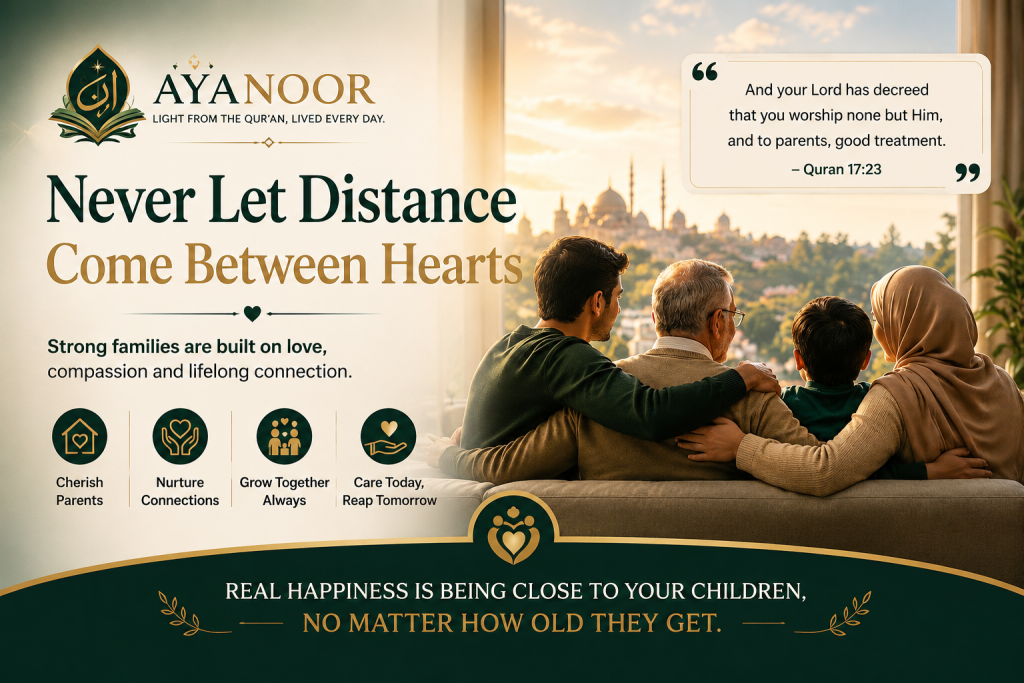
This discussion is not about preventing children from growing, learning, working, marrying, or becoming responsible adults. Rather, it is about preserving emotional closeness, compassion, and lifelong family connection in a world that increasingly celebrates separation over togetherness.
The Human Heart Was Created for Connection
Allah created the family as a source of mercy, peace, and emotional support.
“And among His signs is that He created for you spouses from among yourselves so that you may find tranquility in them; and He placed between you affection and mercy.”
— Quran 30:21
This mercy extends beyond marriage. It includes the relationship between parents and children, siblings, grandparents, and extended family.
Children are not simply individuals who “graduate” from family life at eighteen. Even as adults, they continue to need:
- emotional support,
- guidance,
- belonging,
- wisdom,
- and unconditional love.
Likewise, parents never stop being parents. No matter how old their children become, most mothers and fathers still see them as their little ones.
The Loneliness Crisis in Modern Society
Across many societies today, loneliness among elderly parents has become a silent crisis.
Parents spend decades sacrificing:
- their sleep,
- health,
- money,
- ambitions,
- and emotional energy
to raise their children with love and care. Yet later in life, many grow old alone.
In some cases:
- children live far away,
- visits become rare,
- communication weakens,
- emotional bonds fade,
- and aging parents become isolated and vulnerable.
Some elderly people spend their final years in loneliness, longing not for wealth or luxury, but simply for the warmth of their children and grandchildren nearby.
This is not how human beings were meant to live.
Islam Encourages Lifelong Compassion Toward Parents
The Quran repeatedly emphasizes kindness and closeness toward parents.
“Your Lord has commanded that you worship none but Him, and that you show kindness to parents.”
— Quran 17:23
Allah especially highlights old age:
“Whether one or both of them reach old age with you, do not even say to them a word of irritation…”
— Quran 17:23
Notice the wording:
“reach old age with you.”
This reflects companionship, presence, patience, and care — not emotional abandonment.
Parents Also Need to Reflect
This discussion is not only for children.
Parents must also understand that emotional closeness cannot be demanded later if it was not nurtured earlier.
Children need:
- affection,
- listening,
- emotional safety,
- mercy,
- and acceptance.
A home should not feel like a temporary hotel before adulthood. It should remain a lifelong sanctuary of love and support.
Many young adults today leave home emotionally exhausted, misunderstood, or disconnected. Some parents focus only on financial provision but unintentionally neglect emotional bonding.
Real family strength is built through:
- conversations,
- shared meals,
- mercy,
- patience,
- and mutual respect.
Independence Should Not Mean Emotional Separation
There is nothing wrong with:
- education,
- careers,
- marriage,
- or personal growth.
But independence should never mean:
- emotional distance,
- neglect,
- abandonment,
- or weakening family ties.
Healthy families can allow:
- privacy,
- maturity,
- and responsibility
while still remaining deeply connected.
In many cultures around the world, multiple generations live close together or maintain strong daily relationships. These families often preserve:
- emotional resilience,
- stronger identity,
- community support,
- and intergenerational wisdom.
The Prophet ﷺ and Family Compassion
The life of Prophet Muhammad ﷺ was filled with tenderness toward family.
He showed:
- affection to children,
- patience with elders,
- kindness to daughters,
- and emotional warmth within the household.
He did not teach a model of emotional coldness or detachment.
He said:
“He is not one of us who does not show mercy to our young and respect to our elders.”
Strong societies are not built merely on economic systems. They are built on mercy between generations.
The Psychological Impact on Children
Young people entering adulthood often face:
- anxiety,
- depression,
- loneliness,
- identity struggles,
- financial pressure,
- and emotional confusion.
Many suffer silently because society teaches them that asking parents for emotional support is a weakness.
But human beings do not suddenly stop needing family at eighteen.
Even successful adults continue needing:
- reassurance,
- guidance,
- belonging,
- and unconditional love.
A loving family connection can become one of the greatest protections against emotional isolation.
Real Happiness Is Togetherness
Modern culture often defines success as:
- moving away,
- living alone,
- extreme independence,
- and personal achievement.
But many people later discover that real happiness was much simpler:
- eating together,
- caring for parents,
- hearing children laugh in the home,
- sitting with grandparents,
- and growing old surrounded by family.
The greatest wealth in life is often not material success, but meaningful human connection.
A Message to New Parents
To young parents raising children today:
Do not raise your children only to survive in the world. Raise them to remain emotionally connected to family, compassion, mercy, and responsibility.
Create homes filled with:
- warmth,
- trust,
- listening,
- forgiveness,
- and love.
If children feel emotionally safe at home, they are far more likely to remain connected throughout adulthood.
Children who feel loved deeply often return willingly — not out of obligation, but out of genuine attachment.
Questions for Reflection
- Have modern societies confused independence with emotional separation?
- How can families preserve closeness while still respecting adulthood and personal growth?
- Are we preparing emotionally for old age and family responsibility?
- What kind of relationship are we building with our children today?
- Will our children feel warmth when they think about home years from now?
Conclusion
Family is one of Allah’s greatest blessings. The relationship between parents and children was never meant to expire with age.
Children may grow older, marry, study, work, and build lives of their own — but emotionally, they still need love, guidance, and belonging. Likewise, parents need companionship, dignity, and care as they age.
A compassionate society should not normalize loneliness between generations. It should encourage families to remain emotionally connected, supportive, and present for one another throughout life.
Real happiness is not found only in independence or material success. Often, it is found in being close to the people who love us most — our parents, our children, and our families — growing together through every stage of life with mercy, patience, and love.