

Introduction
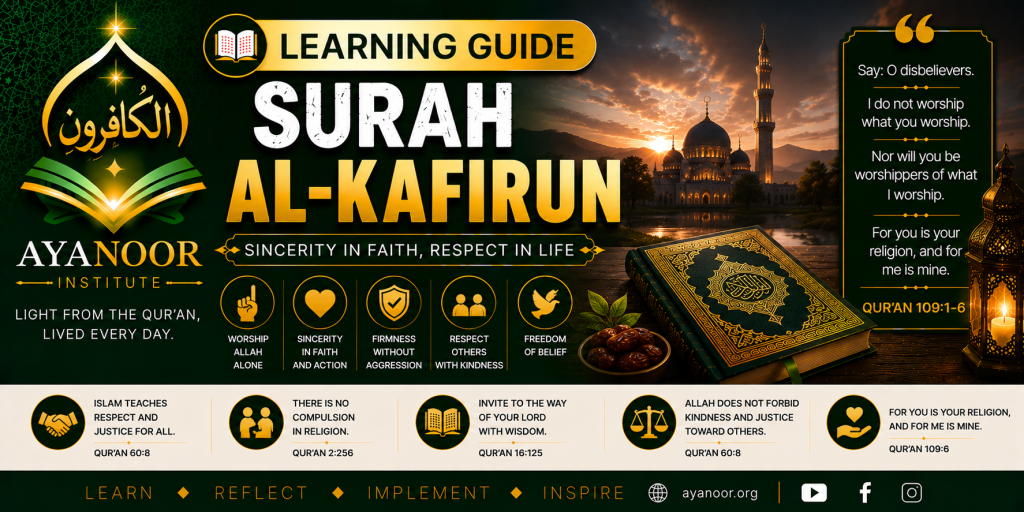
Surah Al-Kafirun is the 109th chapter of the Qur’an and was revealed in Makkah. The surah was revealed when some leaders of Quraysh proposed a compromise to Prophet Muhammad ﷺ: they suggested that both sides worship each other’s beliefs alternately for the sake of unity and peace.
Allah revealed this surah as a clear declaration of sincerity, faith, and the independence of Islamic belief. The chapter teaches believers to remain firm upon truth while maintaining dignity, wisdom, and peaceful coexistence with others.
Surah Al-Kafirun is a powerful lesson about religious integrity, freedom of belief, respect without compromise, and sincere worship directed only to Allah.
1. A Clear Declaration of Faith
The surah begins:
“Say: O disbelievers.”
— Qur’an 109:1
Allah instructed the Prophet ﷺ to address those rejecting the message directly and clearly.
Lessons
- Faith should be expressed with honesty and clarity.
- Believers should not hide or dilute their principles.
- Islam encourages confidence without arrogance.
Related Qur’anic References
- “Indeed, my prayer, sacrifice, life, and death are for Allah.” — Qur’an 6:162
- “The truth is from your Lord.” — Qur’an 18:29
2. Worship Belongs to Allah Alone
Allah says:
“I do not worship what you worship.”
— Qur’an 109:2
Lessons
- Tawheed (belief in one God) is the foundation of Islam.
- Worship must remain pure and sincere for Allah alone.
- Compromising core beliefs weakens faith.
Related Qur’anic References
- “Worship Allah and associate nothing with Him.” — Qur’an 4:36
- “There is no deity except Him.” — Qur’an 2:255
3. Sincerity in Worship
Allah says:
“Nor are you worshippers of what I worship.”
— Qur’an 109:3
Lessons
- True worship requires sincerity and submission to Allah.
- Faith is more than outward rituals; it is conviction of the heart.
- Believers should remain spiritually authentic.
Related Qur’anic References
- “They were only commanded to worship Allah sincerely.” — Qur’an 98:5
- “So worship Allah, sincere to Him in religion.” — Qur’an 39:2
4. No Compromise in Core Beliefs
Allah repeats:
“Nor will I be a worshipper of what you worship.”
— Qur’an 109:4
Lessons
- Islam encourages peaceful coexistence without abandoning principles.
- Truth should not be altered for social acceptance.
- Firmness in belief can coexist with kindness and wisdom.
Related Qur’anic References
- “For you is your religion, and for me is mine.” — Qur’an 109:6
- “There is no compulsion in religion.” — Qur’an 2:256
5. Respect Without Imitation
Allah says:
“Nor will you be worshippers of what I worship.”
— Qur’an 109:5
Lessons
- Respecting others does not require imitating their beliefs.
- Islam teaches dignity and peaceful interaction with people of different faiths.
- Differences should be handled with wisdom and justice.
Related Qur’anic References
- “Allah does not forbid you from being kind and just toward those who do not fight you because of religion.” — Qur’an 60:8
- “Invite to the way of your Lord with wisdom.” — Qur’an 16:125
6. Freedom of Religion
The surah concludes:
“For you is your religion, and for me is mine.”
— Qur’an 109:6
Lessons
- Islam recognizes freedom of belief and conscience.
- Faith must come from sincerity, not force.
- Peaceful coexistence is possible despite differences.
Related Qur’anic References
- “There is no compulsion in religion.” — Qur’an 2:256
- “Will you compel people until they become believers?” — Qur’an 10:99
7. Integrity and Identity
The surah repeatedly emphasizes consistency and firmness.
Lessons
- Believers should maintain their identity with wisdom and humility.
- Social pressure should not weaken moral and spiritual values.
- Integrity earns long-term respect and trust.
Related Qur’anic References
- “So remain on a right course as you have been commanded.” — Qur’an 11:112
- “Hold firmly to the rope of Allah.” — Qur’an 3:103
8. Peaceful Coexistence
Although firm in belief, the surah ends peacefully rather than aggressively.
Lessons
- Islam encourages respectful dialogue and coexistence.
- Differences should not lead to hatred or injustice.
- Wisdom and character are powerful forms of da‘wah.
Related Qur’anic References
- “Speak kindly to people.” — Qur’an 2:83
- “Repel evil with what is better.” — Qur’an 41:34
Key Themes of Surah Al-Kafirun
1. Sincerity in Faith
Worship belongs to Allah alone.
2. Firmness Without Aggression
Believers remain committed while maintaining dignity and peace.
3. Freedom of Belief
Faith cannot be forced upon people.
4. Religious Integrity
Core beliefs should not be compromised.
5. Respectful Coexistence
Islam encourages justice and kindness toward others.
Reflection Questions
- How firm are we in our beliefs and values?
- Do we balance confidence in faith with kindness toward others?
- Are we sincere in our worship of Allah?
- How do we handle differences respectfully?
- Are we protecting our identity while living peacefully in society?
Practical Action Points
- Strengthen understanding of Tawheed and Islamic beliefs.
- Practice sincere worship daily.
- Treat people of all backgrounds with respect and justice.
- Avoid compromising core values for social approval.
- Engage in dialogue with wisdom and kindness.
- Reflect regularly on the meaning of sincerity and integrity.
Conclusion
Surah Al-Kafirun is a powerful declaration of sincerity, integrity, and peaceful coexistence. The surah teaches believers to remain firm upon the worship of Allah alone while respecting the freedom and dignity of others.
It reminds humanity that true faith must be sincere, uncompromised, and rooted in conviction, while interactions with others should remain peaceful, respectful, and guided by wisdom and justice.