

Introduction
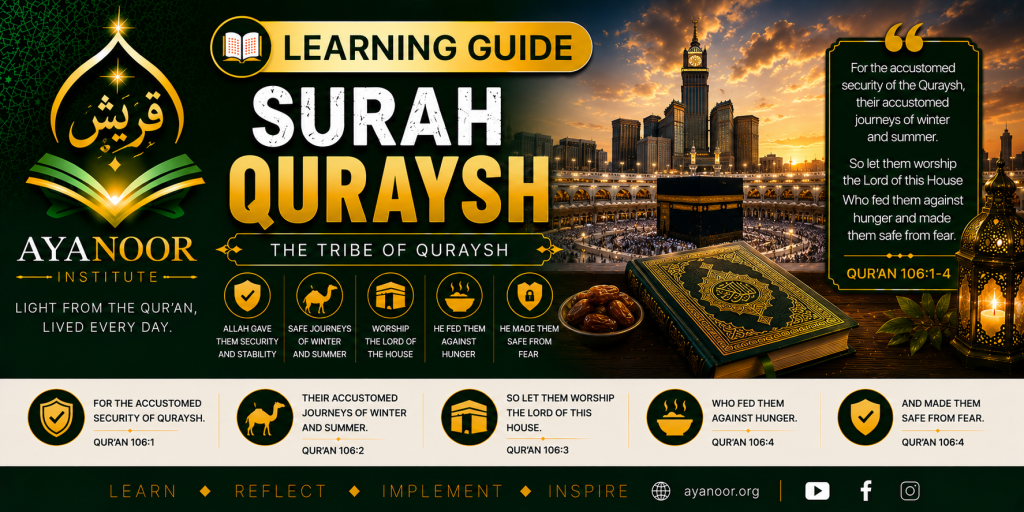
Surah Quraysh is the 106th chapter of the Qur’an and was revealed in Makkah. The surah is named after the tribe of Quraysh, the tribe of Prophet Muhammad ﷺ and the caretakers of the Ka‘bah.
This short chapter reminds the people of Quraysh about the blessings Allah granted them — safety, trade, stability, and provision — and calls them to worship Allah alone with gratitude and sincerity.
Surah Quraysh teaches believers that blessings should lead to gratitude, worship, humility, and service to humanity. It also reminds us that security, sustenance, and success all come from Allah.
1. The Blessing of Unity and Stability
The surah begins:
“For the accustomed security of the Quraysh.”
— Qur’an 106:1
Allah refers to the stability, unity, and familiarity the Quraysh enjoyed in their lives and trade.
Lessons
- Social stability and peace are major blessings from Allah.
- Communities flourish through security and cooperation.
- Many blessings become unnoticed because they are constant.
Related Qur’anic References
- “And remember the favor of Allah upon you when you were enemies and He brought your hearts together.” — Qur’an 3:103
- “Allah presents an example of a secure city.” — Qur’an 16:112
2. Safe Trade and Travel
Allah says:
“Their accustomed journeys of winter and summer.”
— Qur’an 106:2
The Quraysh traveled safely for trade during different seasons.
Lessons
- Provision and economic opportunity are blessings from Allah.
- Halal earning and trade are honorable in Islam.
- Stability and safety allow societies to prosper.
Related Qur’anic References
- “Walk among its slopes and eat from His provision.” — Qur’an 67:15
- “Allah has permitted trade.” — Qur’an 2:275
3. Worship the Lord of the Ka‘bah
Allah says:
“So let them worship the Lord of this House.”
— Qur’an 106:3
The blessings they enjoyed should have led them to worship Allah sincerely.
Lessons
- Gratitude should lead to worship and obedience.
- The Ka‘bah symbolizes devotion to Allah alone.
- Blessings should increase humility, not arrogance.
Related Qur’anic References
- “I did not create jinn and mankind except to worship Me.” — Qur’an 51:56
- “Indeed the first House established for mankind was at Bakkah.” — Qur’an 3:96
4. Allah Provides Food and Sustenance
Allah says:
“Who fed them against hunger.”
— Qur’an 106:4
Lessons
- Every form of sustenance ultimately comes from Allah.
- Food security and provision are often taken for granted.
- Believers should show gratitude through charity and generosity.
Related Qur’anic References
- “It is Allah who provides for you.” — Qur’an 30:40
- “If you are grateful, I will surely increase you.” — Qur’an 14:7
5. Allah Grants Safety and Peace
Allah concludes:
“And made them safe from fear.”
— Qur’an 106:4
Lessons
- Safety and peace are priceless blessings.
- Fear and insecurity can destroy societies.
- Believers should pray for peace and protection for all humanity.
Related Qur’anic References
- “Allah invites to the Home of Peace.” — Qur’an 10:25
- “Let them not fear, nor shall they grieve.” — Qur’an 2:38
6. Gratitude is Central to Faith
Although the surah is short, its entire message revolves around gratitude.
Lessons
- Gratitude is expressed through worship, humility, and good deeds.
- Forgetting blessings can lead to arrogance and heedlessness.
- Thankfulness strengthens faith and inner peace.
Related Qur’anic References
- “Few of My servants are truly grateful.” — Qur’an 34:13
- “Remember Me; I will remember you.” — Qur’an 2:152
7. The Connection Between Surah Al-Fil and Quraysh
Surah Quraysh follows Surah Al-Fil in the Qur’an. Allah first reminded the Quraysh how He protected the Ka‘bah from Abraha’s army, then reminded them to worship Him in gratitude.
Lessons
- Allah’s protection should strengthen faith.
- Blessings and miracles carry responsibility.
- History should increase gratitude and reflection.
Related Qur’anic References
- “Did He not make their plan go astray?” — Qur’an 105:2
- “Indeed in their stories are lessons.” — Qur’an 12:111
8. Worship Beyond Material Blessings
The Quraysh enjoyed wealth and influence, yet many still rejected the message.
Lessons
- Material success alone does not guarantee guidance.
- True success lies in worship and sincerity.
- Believers should not allow comfort to create heedlessness.
Related Qur’anic References
- “The worldly life is only enjoyment of delusion.” — Qur’an 3:185
- “Competition in worldly increase distracts you.” — Qur’an 102:1
Key Themes of Surah Quraysh
1. Gratitude for Blessings
Provision, safety, and stability come from Allah.
2. Worship of Allah Alone
Blessings should lead to sincere worship.
3. Security and Peace
Social peace is among Allah’s greatest favors.
4. Sustenance and Provision
Allah is the true Provider.
5. Reflection on Divine Protection
Allah’s care for humanity should strengthen faith.
Reflection Questions
- Are we truly grateful for safety, food, and stability?
- How do we express gratitude to Allah daily?
- Have worldly comforts distracted us spiritually?
- Are we helping others who lack security and provision?
- Do we recognize Allah’s blessings before losing them?
Practical Action Points
- Thank Allah daily for food, shelter, and safety.
- Increase acts of worship and remembrance.
- Support those facing poverty and hardship.
- Earn and spend wealth in halal ways.
- Reflect regularly on Allah’s favors.
- Pray for peace and security for humanity.
Conclusion
Surah Quraysh is a beautiful reminder that every blessing — safety, food, trade, stability, and opportunity — comes from Allah alone. The surah teaches believers that gratitude is not merely words, but worship, humility, obedience, and care for others.
It reminds humanity that true security and provision come from Allah, and that the greatest response to His blessings is sincere worship and thankful living.