

Introduction
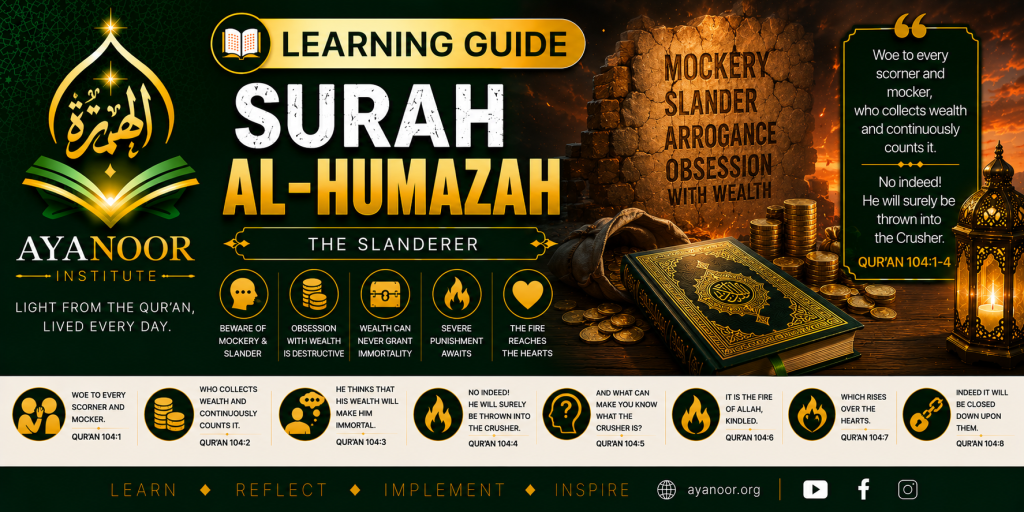
Surah Al-Humazah is the 104th chapter of the Qur’an and was revealed in Makkah. The word Al-Humazah refers to a person who mocks, slanders, insults, or speaks negatively about others. This powerful surah warns against arrogance, backbiting, pride in wealth, and harmful speech.
The chapter exposes the destructive nature of mockery and material obsession while reminding believers that true honor comes from righteousness and humility — not wealth, status, or humiliating others.
Surah Al-Humazah teaches moral responsibility, kindness in speech, accountability before Allah, and the danger of arrogance and cruelty.
1. Woe to Every Mocking Slanderer
The surah begins:
“Woe to every scorner and mocker.”
— Qur’an 104:1
Lessons
- Islam strongly condemns ridicule, insults, and humiliation.
- Harmful speech damages hearts, relationships, and communities.
- Believers should protect their tongues and character.
Related Qur’anic References
- “Do not mock one another.” — Qur’an 49:11
- “Do not backbite one another.” — Qur’an 49:12
2. Obsession with Wealth
Allah says:
“Who collects wealth and continuously counts it.”
— Qur’an 104:2
Lessons
- Wealth can become a dangerous distraction when it controls the heart.
- Constant obsession with money leads to spiritual emptiness.
- Islam encourages balance, gratitude, and generosity.
Related Qur’anic References
- “Competition in worldly increase distracts you.” — Qur’an 102:1
- “Your wealth and children are only a test.” — Qur’an 64:15
3. Wealth Cannot Grant Permanence
Allah says:
“He thinks that his wealth will make him immortal.”
— Qur’an 104:3
Lessons
- No amount of wealth can prevent death.
- Material success does not guarantee true happiness or salvation.
- Human beings should prepare for the Hereafter, not just worldly life.
Related Qur’anic References
- “Every soul shall taste death.” — Qur’an 3:185
- “Wherever you may be, death will overtake you.” — Qur’an 4:78
4. The Consequence of Arrogance
Allah warns:
“No indeed! He will surely be thrown into the Crusher.”
— Qur’an 104:4
The “Crusher” (Al-Hutamah) refers to a destructive punishment in Hell.
Lessons
- Pride and cruelty have serious consequences.
- Allah’s justice reaches every oppressor.
- Believers should remain humble regardless of wealth or status.
Related Qur’anic References
- “Indeed Allah does not love the arrogant.” — Qur’an 16:23
- “Do not walk upon the earth arrogantly.” — Qur’an 17:37
5. What is the Crusher?
Allah says:
“And what can make you know what the Crusher is?”
— Qur’an 104:5
Lessons
- Allah emphasizes the severity of punishment for ظلم (oppression) and arrogance.
- The Hereafter is more serious than worldly life.
- Warnings in the Qur’an are acts of mercy meant to guide humanity.
Related Qur’anic References
- “Indeed Hell has been lying in wait.” — Qur’an 78:21
- “Your Lord is severe in punishment.” — Qur’an 85:12
6. The Fire of Allah
Allah says:
“It is the fire of Allah, kindled.”
— Qur’an 104:6
Lessons
- Hellfire is a real consequence for persistent evil and corruption.
- Believers should seek Allah’s forgiveness constantly.
- Fear of Allah helps purify behavior and intentions.
Related Qur’anic References
- “Fear the Fire whose fuel is people and stones.” — Qur’an 2:24
- “Indeed your Lord is Forgiving and Merciful.” — Qur’an 18:58
7. The Fire Reaches the Hearts
Allah says:
“Which rises over the hearts.”
— Qur’an 104:7
Lessons
- Spiritual diseases begin in the heart.
- Arrogance, hatred, envy, and mockery corrupt the soul internally.
- Purification of the heart is essential in Islam.
Related Qur’anic References
- “The Day when neither wealth nor children will benefit except one who comes to Allah with a sound heart.” — Qur’an 26:88-89
- “Indeed in the body there is a piece of flesh… if it is sound, the whole body is sound.” — Hadith
8. A Confined Punishment
Allah says:
“Indeed it will be closed down upon them.”
— Qur’an 104:8
Lessons
- Persistent wrongdoing leads to spiritual imprisonment.
- The Hereafter contains eternal consequences.
- Believers should seek repentance before it is too late.
Related Qur’anic References
- “Allah accepts the repentance of those who repent.” — Qur’an 4:17
- “Do not despair of the mercy of Allah.” — Qur’an 39:53
Key Themes of Surah Al-Humazah
1. The Danger of Harmful Speech
Mockery, slander, and insults destroy individuals and communities.
2. Wealth is a Test
Money should not become a source of pride or arrogance.
3. Humility and Character
True honor comes through righteousness and sincerity.
4. Accountability in the Hereafter
Every action and intention carries consequences.
5. Purification of the Heart
Spiritual diseases begin internally before appearing outwardly.
Reflection Questions
- How careful are we with our words and speech?
- Do we mock, judge, or humiliate others knowingly or unknowingly?
- Has love of wealth affected our priorities?
- Are we actively purifying our hearts from pride and envy?
- How often do we seek forgiveness from Allah sincerely?
Practical Action Points
- Avoid gossip, mockery, and harmful speech completely.
- Speak kindly and respectfully to others.
- Use wealth responsibly and give charity regularly.
- Practice humility and gratitude daily.
- Make sincere repentance part of daily worship.
- Reflect on the condition of the heart regularly.
Conclusion
Surah Al-Humazah is a strong warning against arrogance, harmful speech, obsession with wealth, and humiliating others. The surah teaches that true success is not measured by money or status, but by sincerity, humility, and good character.
It reminds believers that words matter deeply, hearts must be purified, and every person will stand accountable before Allah. Through kindness, gratitude, repentance, and humility, believers can protect themselves from spiritual destruction and earn Allah’s mercy and pleasure.