

Introduction
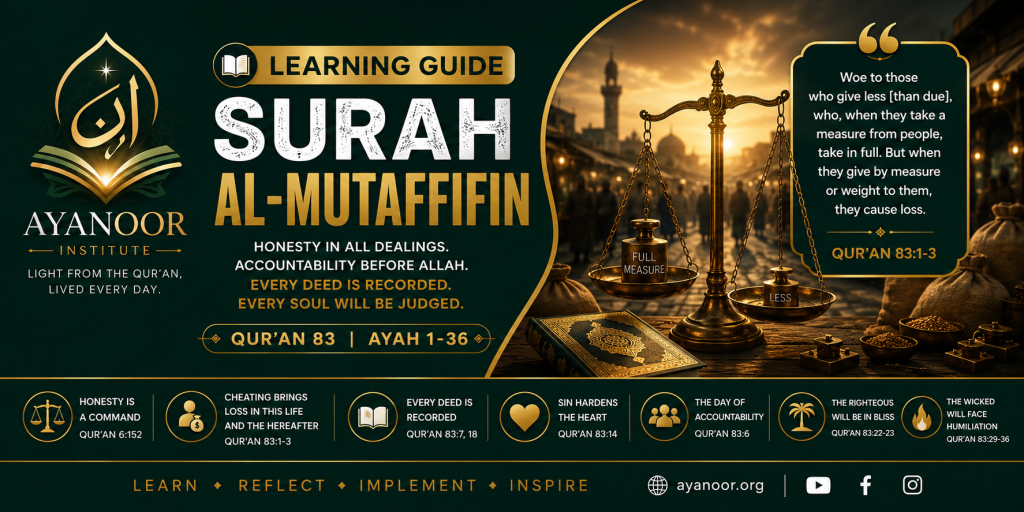
Surah Al-Mutaffifin is the 83rd chapter of the Qur’an and was revealed in Makkah, with some scholars suggesting parts may have been revealed in Madinah. The word Al-Mutaffifin means “Those Who Give Less” or “Those Who Cheat in Measure.”
The surah strongly condemns dishonesty, corruption, exploitation, and hypocrisy in dealings with others. It also highlights the reality of accountability, the records of deeds, the reward of the righteous, and the humiliation of those who rejected truth.
This chapter teaches that Islam is not only about worship rituals, but also about honesty, justice, integrity, and character in everyday life.
1. Condemnation of Dishonesty and Fraud
The surah begins with a warning:
“Woe to those who give less [than due].”
— Qur’an 83:1
These were people who demanded full measure when receiving from others, but cheated when giving.
“Who, when they take a measure from people, take in full. But when they give by measure or weight to them, they cause loss.”
— Qur’an 83:2-3
Lessons
- Islam demands honesty in business and daily interactions.
- Exploitation and cheating destroy trust and society.
- Accountability includes financial and social dealings.
Related Qur’anic References
- “Give full measure and weight in justice.” — Qur’an 6:152
- “And do not deprive people of their due.” — Qur’an 7:85
2. Awareness of Accountability
Allah asks:
“Do they not think that they will be resurrected?”
— Qur’an 83:4
The surah connects dishonesty with forgetting the Hereafter.
Lessons
- Awareness of Judgment encourages integrity.
- Corruption grows when accountability is ignored.
- Faith should influence personal and professional behavior.
Related Qur’anic References
- “Whoever does an atom’s weight of good will see it.” — Qur’an 99:7
- “Indeed, Allah commands justice.” — Qur’an 16:90
3. The Great Day of Judgment
Allah describes:
“The Day when mankind will stand before the Lord of the worlds.”
— Qur’an 83:6
Every person will stand before Allah with complete truth and justice.
Lessons
- Wealth, power, and status will not matter on that Day.
- True success is spiritual and moral.
- Every action and intention matters.
Related Qur’anic References
- “Every soul shall taste death.” — Qur’an 3:185
- “The command that Day belongs entirely to Allah.” — Qur’an 82:19
4. The Records of the Wicked — Sijjin
Allah mentions the record of evil deeds:
“No indeed! The record of the wicked is in Sijjin.”
— Qur’an 83:7
Sijjin refers to a confined and humiliating register or place connected with punishment.
Lessons
- Allah records every injustice and wrongdoing.
- Hidden sins are not forgotten.
- Persistent corruption darkens the heart.
Related Qur’anic References
- “This Book leaves nothing small or great except that it has recorded it.” — Qur’an 18:49
- “Indeed, over you are keepers, noble and recording.” — Qur’an 82:10-11
5. Hearts Become Hardened by Sin
Allah explains why many reject truth:
“No! Rather, the stain has covered their hearts because of what they used to earn.”
— Qur’an 83:14
Continuous sin and dishonesty gradually harden the heart.
Lessons
- Sins affect spiritual clarity.
- Repeated wrongdoing can make truth difficult to accept.
- Repentance cleanses the heart.
Related Qur’anic References
- “Successful indeed is the one who purifies it.” — Qur’an 91:9
- “Indeed, in the remembrance of Allah do hearts find rest.” — Qur’an 13:28
6. Separation from Allah’s Mercy
Allah says regarding the wicked:
“Indeed, from their Lord that Day, they will be veiled.”
— Qur’an 83:15
This spiritual separation is among the greatest punishments.
Lessons
- Nearness to Allah is the greatest blessing.
- Sin distances the heart from spiritual peace.
- True happiness comes through faith and obedience.
Related Qur’anic References
- “Allah is the ally of those who believe.” — Qur’an 2:257
- “Verily, in the remembrance of Allah do hearts find rest.” — Qur’an 13:28
7. The Reward of the Righteous — Illiyyin
Allah contrasts the wicked with the righteous:
“No indeed! The record of the righteous is in Illiyyin.”
— Qur’an 83:18
Illiyyin refers to an exalted register connected with honor and Paradise.
Lessons
- Allah honors sincerity and righteousness.
- Good deeds are preserved eternally.
- Paradise is the ultimate success.
Related Qur’anic References
- “Indeed, the righteous will be in pleasure.” — Qur’an 82:13
- “Peace be upon you for what you patiently endured.” — Qur’an 13:24
8. The Joy of Paradise
The surah beautifully describes the believers in Paradise:
“Upon adorned couches, observing.”
— Qur’an 83:23
Their faces shine with joy and peace.
Lessons
- Eternal happiness belongs to the righteous.
- Patience and integrity are rewarded.
- The Hereafter is worth every sacrifice.
Related Qur’anic References
- “Faces that Day will be bright, laughing and rejoicing.” — Qur’an 80:38-39
- “No soul knows what joy is hidden for them.” — Qur’an 32:17
9. Those Who Mocked Believers Will Be Reversed
The surah mentions how disbelievers mocked believers in worldly life.
But on the Day of Judgment:
“So today those who believed are laughing at the disbelievers.”
— Qur’an 83:34
Lessons
- Truth may be mocked temporarily, but falsehood never lasts.
- Believers should remain patient during criticism.
- Allah ultimately honors sincerity and faith.
Related Qur’anic References
- “Indeed, those who committed crimes used to laugh at those who believed.” — Qur’an 83:29
- “Indeed Allah is with the patient.” — Qur’an 2:153
Key Themes of Surah Al-Mutaffifin
1. Honesty and Integrity
Islam condemns fraud and exploitation.
2. Accountability
Every deed is recorded before Allah.
3. Spiritual Consequences of Sin
Persistent wrongdoing hardens the heart.
4. Justice
Allah’s judgment is perfect and fair.
5. Reward of the Righteous
Paradise awaits sincere believers.
6. Patience During Mockery
Believers should remain steadfast despite criticism.
Reflection Questions
- Are we completely honest in our dealings with others?
- How aware are we of accountability before Allah?
- Are there habits that may be hardening our hearts?
- Do we prioritize integrity even when no one is watching?
- How can we strengthen sincerity and justice in daily life?
Practical Action Points
- Practice honesty in business and personal relationships.
- Avoid cheating, deception, and exploitation.
- Repent regularly and purify the heart.
- Reflect on the Hereafter and accountability.
- Treat others fairly and respectfully.
- Remain patient when facing criticism for faith or integrity.
Conclusion
Surah Al-Mutaffifin is a powerful reminder that Islam demands honesty, justice, and integrity in every aspect of life. The surah warns against corruption and deception while encouraging believers toward sincerity, accountability, and righteousness.
It teaches that every deed is recorded, every injustice will be addressed, and true success belongs to those who live with honesty, humility, and awareness of Allah.