

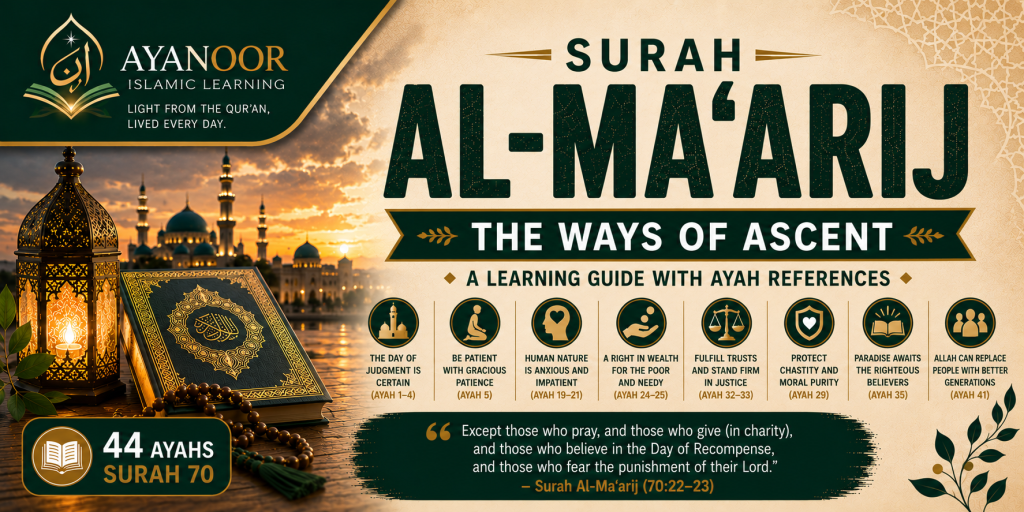
Surah Al-Ma‘arij is the 70th chapter of the Qur’an, consisting of 44 ayahs. The word Al-Ma‘arij means “The Ways of Ascent” or “The Ascending Stairways,” referring to the pathways through which angels ascend to Allah and symbolizing spiritual elevation and the journey toward divine accountability.
The Surah focuses on the certainty of the Hereafter, human impatience and weakness, the qualities of true believers, patience during hardship, and preparation for the Day of Judgment.
1. The Reality of Divine Judgment
The Surah begins with a warning about someone demanding the punishment of Allah.
“A questioner asked about a punishment bound to happen.”
— Ayah 1
Lessons
- The Day of Judgment is certain.
- Mocking or denying divine accountability does not change reality.
- Allah’s justice will ultimately prevail.
Reflection
Many people become distracted by worldly life and assume consequences will never come. The Surah reminds believers that every action will eventually be accounted for.
2. Allah Is the Lord of the Ways of Ascent
“From Allah, Lord of the Ways of Ascent.”
— Ayah 3
And:
“The angels and the Spirit ascend to Him…”
— Ayah 4
Lessons
- Allah’s authority extends across all creation.
- The spiritual world is real even if unseen.
- Human beings are connected to a greater reality beyond worldly life.
Reflection
The Surah encourages believers to think beyond material existence and remember the eternal world.
3. The Day of Judgment Will Be Extremely Difficult
“The angels and the Spirit ascend to Him in a Day whose measure is fifty thousand years.”
— Ayah 4
Lessons
- The Hereafter is beyond human imagination.
- Accountability before Allah is serious and immense.
- Worldly life is brief compared to eternity.
Reflection
People spend enormous energy preparing for temporary worldly events but often neglect preparation for eternal life.
4. Practice Beautiful Patience
Allah instructs the Prophet ﷺ:
“So be patient with gracious patience.”
— Ayah 5
Lessons
- Patience in Islam includes dignity, trust, and emotional balance.
- Believers should remain calm during hardship and opposition.
- Patience is a sign of spiritual maturity.
Reflection
Beautiful patience means:
- Avoiding despair
- Avoiding bitterness
- Continuing righteous action
- Trusting Allah’s wisdom
5. Human Beings Are Naturally Impatient
The Surah describes human weakness:
“Indeed, mankind was created anxious.”
— Ayah 19
“When evil touches him, impatient.”
— Ayah 20
“And when good touches him, withholding.”
— Ayah 21
Lessons
- Human beings naturally struggle with fear, greed, and impatience.
- Faith helps control emotional instability.
- Spiritual discipline transforms character.
Reflection
Without spiritual guidance, people may become:
- Overwhelmed during hardship
- Ungrateful during ease
- Self-centered and fearful
The Qur’an teaches balance and inner stability.
6. The Qualities of True Believers
The Surah then lists beautiful qualities of sincere believers.
They Maintain Prayer
“Except those devoted to prayer.”
— Ayah 22
Lessons
- Salah creates spiritual stability.
- Consistent worship strengthens the heart.
- Prayer connects believers to Allah during all circumstances.
They Care for the Poor and Needy
“And those within whose wealth is a known right for the beggar and the deprived.”
— Ayahs 24–25
Lessons
- Wealth carries social responsibility.
- Compassion is part of faith.
- Generosity purifies the soul.
Reflection
Islam builds caring communities by encouraging believers to support the vulnerable.
They Believe in the Hereafter
“And those who believe in the Day of Judgment.”
— Ayah 26
Lessons
- Awareness of accountability shapes behavior.
- Belief in the Hereafter strengthens morality and sincerity.
- Eternal thinking changes worldly priorities.
They Protect Their Morality
“And those who guard their chastity.”
— Ayah 29
Lessons
- Moral discipline protects individuals and society.
- Islam encourages dignity and self-control.
- Purity strengthens spiritual well-being.
They Fulfill Trusts and Promises
“And those who are faithful to their trusts and promises.”
— Ayah 32
Lessons
- Trustworthiness is a core Islamic value.
- Faith should appear through honesty and responsibility.
- Keeping promises builds healthy societies.
Reflection
Integrity matters in:
- Business
- Family life
- Leadership
- Friendships
- Community relationships
They Stand Firm in Justice and Truth
“And those who stand firm in their testimonies.”
— Ayah 33
Lessons
- Justice requires courage and honesty.
- Believers should not distort truth for personal benefit.
- Fairness is part of worship.
7. Paradise for the Righteous
After listing these qualities, Allah says:
“Those will be honored in gardens.”
— Ayah 35
Lessons
- True success belongs to the righteous.
- Paradise is the reward for sincere faith and perseverance.
- Spiritual discipline leads to eternal peace.
Reflection
The Surah shifts focus away from temporary worldly rewards toward eternal honor with Allah.
8. Warning to Those Who Mock Faith
The Surah criticizes those who mocked the Prophet ﷺ and rushed arrogantly around him.
“What is the matter with those who disbelieve, rushing toward you?”
— Ayah 36
Lessons
- Arrogance blinds people from truth.
- Mockery does not weaken revelation.
- Truth remains firm regardless of opposition.
9. Allah Can Replace People With Better Generations
“We are surely able to replace them with better than them…”
— Ayah 41
Lessons
- Human beings are not indispensable.
- Gratitude and humility are essential.
- Societies rise and fall based on moral condition.
Reflection
The Surah reminds believers not to become arrogant because blessings can be removed.
Major Themes of Surah Al-Ma‘arij
| Theme | Ayah Reference |
| Certainty of divine judgment | 1–3 |
| The greatness of the Hereafter | 4 |
| Beautiful patience | 5 |
| Human anxiety and impatience | 19–21 |
| Consistent prayer | 22–23 |
| Charity and social responsibility | 24–25 |
| Belief in the Hereafter | 26 |
| Moral discipline | 29 |
| Trustworthiness and honesty | 32 |
| Justice and truthful testimony | 33 |
| Paradise for the righteous | 35 |
| Warning against arrogance | 36–41 |
Practical Lessons for Daily Life
Personal Growth
- Practice patience during hardship.
- Control anxiety through prayer and remembrance.
- Build strong moral discipline.
Family & Society
- Fulfill promises and responsibilities.
- Care for the poor and vulnerable.
- Stand for justice and truth.
Spiritual Development
- Strengthen belief in the Hereafter.
- Pray consistently and sincerely.
- Focus on eternal success rather than temporary worldly gain.
Self-Reflection Questions
- How patient am I during difficulty?
- Does prayer bring stability into my life?
- Am I trustworthy in my dealings?
- How do I treat people in need?
- Am I preparing seriously for the Hereafter?
Final Reflection
The Quran teaches believers that while human beings are naturally anxious and impatient, faith, prayer, generosity, honesty, and patience transform the heart and prepare it for eternal success.
The Surah reminds humanity that:
- The Hereafter is real
- Accountability is certain
- Character matters deeply
- Prayer and patience strengthen the soul
- True honor belongs to those who live righteously
Through its powerful descriptions and moral guidance, the Surah calls believers to rise spiritually through the “ways of ascent” toward closeness to Allah and eternal peace.
Leave a Reply