
The Longest Verse in the Quran: Financial Transparency
One of the most remarkable realities about the Quran is that it does not only guide human beings spiritually — it also teaches them how to live responsibly with one another.
Many people assume trust means avoiding formal agreements, written contracts, or documentation. In some cultures, asking for written proof is even seen as disrespectful or a sign of suspicion.
But the Quran teaches something profoundly balanced:
Trust and documentation are not opposites.
In fact, proper documentation protects trust.
This wisdom is beautifully explained in Surah Al-Baqarah through the longest verse in the Quran:
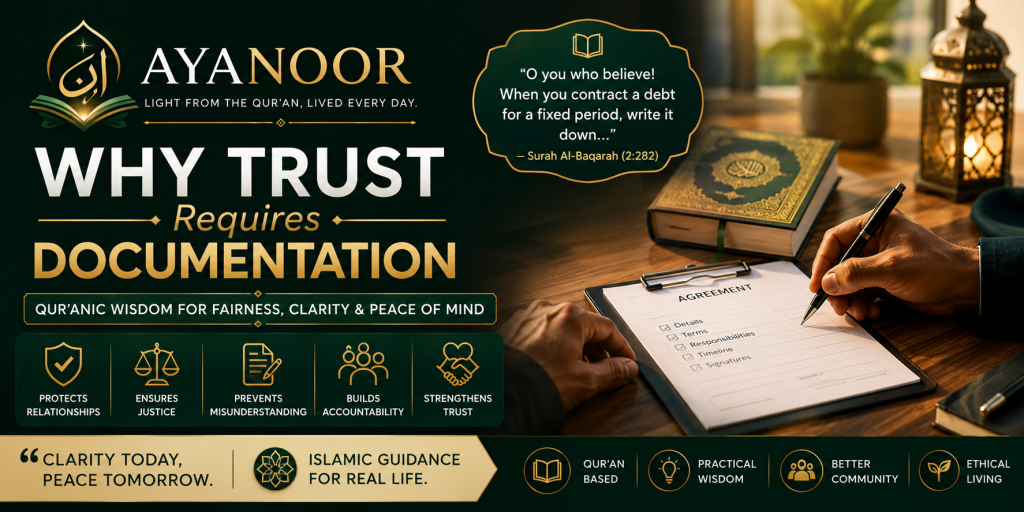
“O you who believe! When you contract a debt for a fixed period, write it down…”
— Surah Al-Baqarah (2:282)
This verse is extraordinary because it demonstrates how seriously Islam takes:
- fairness
- transparency
- accountability
- protection of relationships
- preservation of rights
The Quran understands human nature deeply. Even good people can forget details, misunderstand agreements, become emotionally affected, or face changing circumstances over time.
Documentation prevents confusion before conflict begins.
Why the Quran Emphasizes Writing Things Down
At first glance, documenting agreements may appear to be only a financial matter. But the Quran’s guidance goes much deeper.
The purpose is not distrust.
The purpose is clarity.
Many relationships break not because people intended harm, but because expectations were never clearly defined.
The Quran teaches that clarity is mercy.
1. Protecting Relationships From Future Conflict
Many friendships, partnerships, and even family relationships become damaged because people rely only on memory or verbal understanding.
A person may say:
- “I thought we agreed on this.”
- “That’s not what I meant.”
- “I remember it differently.”
- “I trusted you.”
Over time, emotions replace facts.
The Quran introduces documentation as a protection for human relationships.
“That is more just in the sight of Allah and stronger as evidence and more likely to prevent doubt between you…”
— Surah Al-Baqarah (2:282)
This is incredibly relevant today where disputes frequently arise over:
- business partnerships
- inheritance
- loans
- employment
- property
- investments
- family responsibilities
Sometimes people lose not only money, but lifelong relationships because nothing was documented properly.
2. Trust Does Not Mean Ignoring Responsibility
One of the biggest misconceptions in many communities is the idea that:
“If we trust each other, we do not need paperwork.”
But the Quran itself instructs believers to document transactions.
This means:
- trust should exist
- honesty should exist
- but responsibility should also exist
Islam teaches human beings to combine good intentions with practical wisdom.
Even the most sincere people can:
- forget details
- pass away unexpectedly
- face financial hardship
- misunderstand timelines
- experience emotional pressure
Documentation protects everyone involved.
3. Emotional Intelligence in Financial Matters
Money changes relationships.
The Quran recognizes that financial matters can emotionally affect people in ways they never expected.
Many conflicts begin with statements like:
- “I helped you when nobody else did.”
- “You promised me.”
- “I thought you would understand.”
- “You changed after money became involved.”
This is why the Quran encourages structure, witnesses, and written agreements — not to remove love, but to preserve dignity and fairness.
Healthy relationships require both compassion and boundaries.
4. Documentation as a Form of Justice
One of the central themes of the Quran is justice.
Documentation helps:
- protect the weak
- preserve evidence
- reduce exploitation
- ensure accountability
- prevent manipulation
Without documentation, vulnerable people are often harmed most:
- widows
- elderly parents
- women denied inheritance
- workers denied wages
- business partners without legal proof
The Quran’s guidance protects society from chaos and oppression.
5. The Modern Relevance of This Quranic Wisdom
Today’s world depends heavily on systems of documentation:
- contracts
- invoices
- digital records
- business agreements
- property ownership
- employment policies
- banking systems
Yet despite advanced systems, conflicts still happen because many people ignore ethical responsibility behind documentation.
The Quran teaches that documentation should not become a tool for exploitation. Instead, it should reflect:
- honesty
- fairness
- transparency
- compassion
- accountability
The goal is not merely legality.
The goal is justice.
6. Family Relationships and Clear Communication
This wisdom is not limited to business.
Many family conflicts emerge because expectations were never discussed clearly:
- caregiving responsibilities
- inheritance matters
- shared property
- marriage expectations
- financial support
People sometimes avoid difficult conversations in order to “keep peace,” but silence often creates larger problems later.
The Quran teaches human beings to address responsibilities with wisdom and clarity before tensions grow.
7. Documentation Builds Long-Term Stability
Strong communities are not built only on emotions. They are built on trust supported by structure and accountability.
This principle applies to:
- organizations
- charities
- schools
- businesses
- cooperative societies
- families
- partnerships
When systems are transparent:
- people feel safer
- misunderstandings decrease
- leadership becomes accountable
- communities remain stable
The Quran encourages believers to create societies based on integrity, not confusion.
8. Allah Wants Ease, Not Hardship
One of the beautiful lessons from this verse is that Allah wants human beings to avoid unnecessary pain and conflict.
The Quranic system aims to reduce:
- suspicion
- resentment
- emotional disputes
- injustice
- broken relationships
What appears to be a simple instruction about writing things down is actually part of a larger divine wisdom about preserving human dignity and social harmony.
Reflection Questions
- How many conflicts could be avoided through clear communication?
- Do we sometimes confuse trust with avoiding responsibility?
- Are our agreements fair and transparent?
- Are we protecting relationships through clarity?
- Do our financial dealings reflect honesty and accountability?
Conclusion
Surah Al-Baqarah teaches that trust is strengthened — not weakened — by proper documentation.
The Quran recognizes the complexity of human relationships and provides guidance that remains deeply relevant today.
Documentation:
- protects trust
- preserves dignity
- prevents injustice
- strengthens communities
- reduces conflict
- encourages accountability
True trust is not careless.
True trust is responsible.
And one of the most compassionate things people can do for one another is to ensure that expectations, rights, and responsibilities are made clear before misunderstandings begin.