
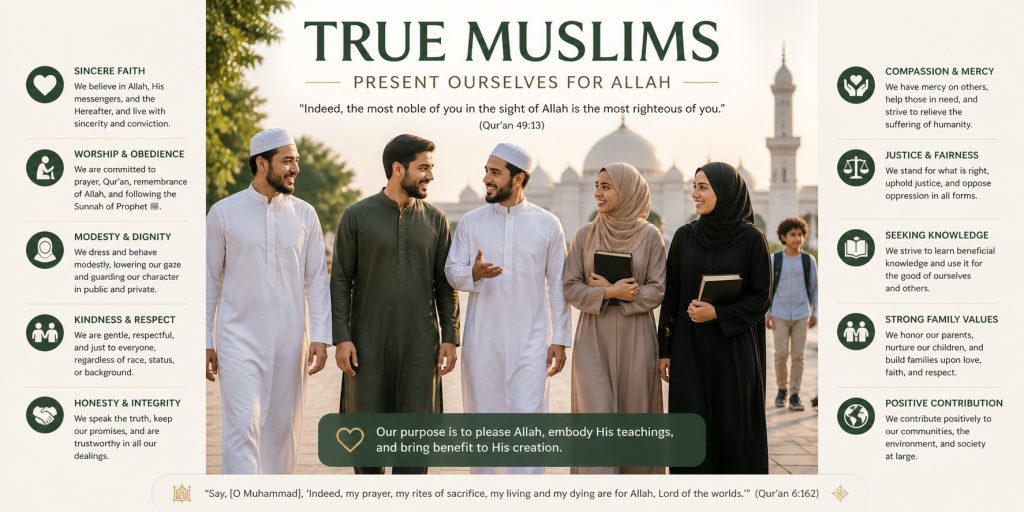
A meaningful understanding of how Muslims should present themselves to non-Muslims begins with recognizing that, in Islam, character is the first form of دعوت (inviting others to truth). The Quran repeatedly emphasizes that guidance is not only conveyed through words, but through conduct—honesty, humility, patience, and compassion. Therefore, the most powerful way a Muslim can inspire curiosity and respect is by embodying the اخلاق (character) taught by Muhammad, whose life was described as a living example of the Qur’an.
A Muslim’s interaction with non-Muslims should be rooted in respect, wisdom, and sincerity, not argument or superiority. The Qur’an instructs believers to دعوت with wisdom and beautiful speech, meaning that conversations should be thoughtful, calm, and empathetic. Rather than trying to “win” debates, the goal should be to build trust and genuine human connection. When people experience kindness, fairness, and integrity firsthand, it naturally creates curiosity: What inspires this way of life? That curiosity is often the beginning of deeper interest in Islam.
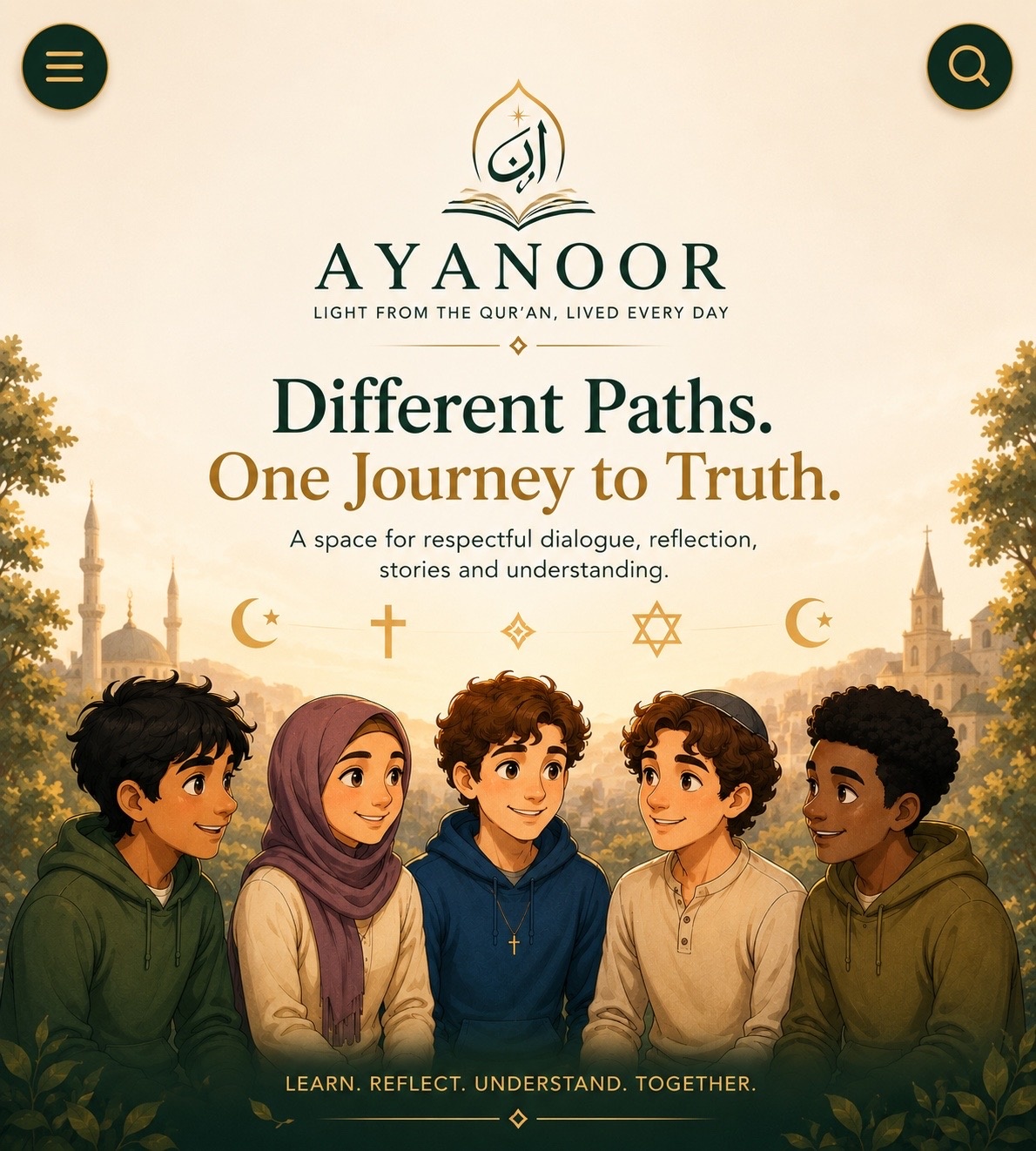
Equally important is the idea that Muslims should present Islam not as something isolated or entirely new, but as part of a continuous chain of divine revelation. The Qur’an teaches that God sent guidance through many prophets, including Abraham, Moses, and Jesus, and that earlier scriptures such as the Torah and the Gospel were also revelations from the same Creator. By highlighting this continuity, Muslims can help non-Muslims—especially those from Jewish or Christian backgrounds—see Islam not as a rejection of their beliefs, but as a confirmation and continuation of them.
This approach removes barriers and builds bridges. When someone understands that Muhammad did not come to erase previous messages but to reaffirm and complete them, it reframes Islam as part of a shared spiritual heritage. This perspective fosters openness rather than defensiveness, making it easier for others to explore the Qur’an with a sense of familiarity rather than distance.
At the same time, Muslims must demonstrate that Islam is not only about theology, but about living principles—justice, compassion, discipline, gratitude, and social responsibility. When these values are consistently practiced, they create a powerful, silent invitation. People are often more influenced by what they observe than what they are told. A Muslim who is trustworthy in business, kind in relationships, patient in hardship, and fair in dealings becomes a living reflection of Qur’anic teachings.
Another key element is humility. Muslims are encouraged to remember that guidance ultimately comes from God, not from human persuasion. This removes pressure and allows interactions to remain sincere rather than forceful. The role of a Muslim is to present truth clearly and beautifully, while respecting the freedom and journey of others.
In essence, inspiring non-Muslims to learn about Islam requires a balance of character, knowledge, and approach:
- Character that reflects the teachings
- Knowledge that connects Islam to previous revelations
- Approach that is gentle, respectful, and wise
When these elements come together, Islam is not just explained—it is experienced. And when people experience its values through real human interaction, it naturally sparks interest in the Quran and the message of Muhammad.
Ultimately, the goal is not simply to inform, but to inspire—to present Islam as a continuation of a timeless message from one God, carried by many prophets, and lived through sincere character.
Leave a Reply